How to Choose the Best Ceramic Cartridges?
Ceramic Cartridges may look like small parts, but they control the feel and reliability of many faucets. A smooth handle turn depends on precise surfaces hidden inside the valve. Choose poorly, and a drip or stiff movement may follow.
There is no verified expert quotation or source provided for this article. Rather than invent a name or quote, this guide focuses on checkable selection criteria. A genuine specialist’s comment can be added once its original source is confirmed.
Start with compatibility. Match the cartridge to the faucet’s brand, model, dimensions, and handle arrangement. A cartridge that looks nearly identical may still have a different stem or seal position. Check the product drawing, measure the old part, and photograph its orientation before removal. Small details matter.
Then consider materials, sealing design, operating pressure, and replacement support. Ask whether the ceramic discs are accurately finished and whether spare seals are available. Look for clear specifications and a defined warranty, not just claims such as “premium” or “universal.” Those words can hide missing details.
Installation matters, too. Flush debris from the supply lines and avoid forcing the stem into place. One rushed fit can damage a new seal. It happens.
This guide will compare the practical trade-offs, explain how to verify fit, and flag common buying mistakes. Not every cartridge suits every faucet. A careful match is usually worth more than a polished product photo.
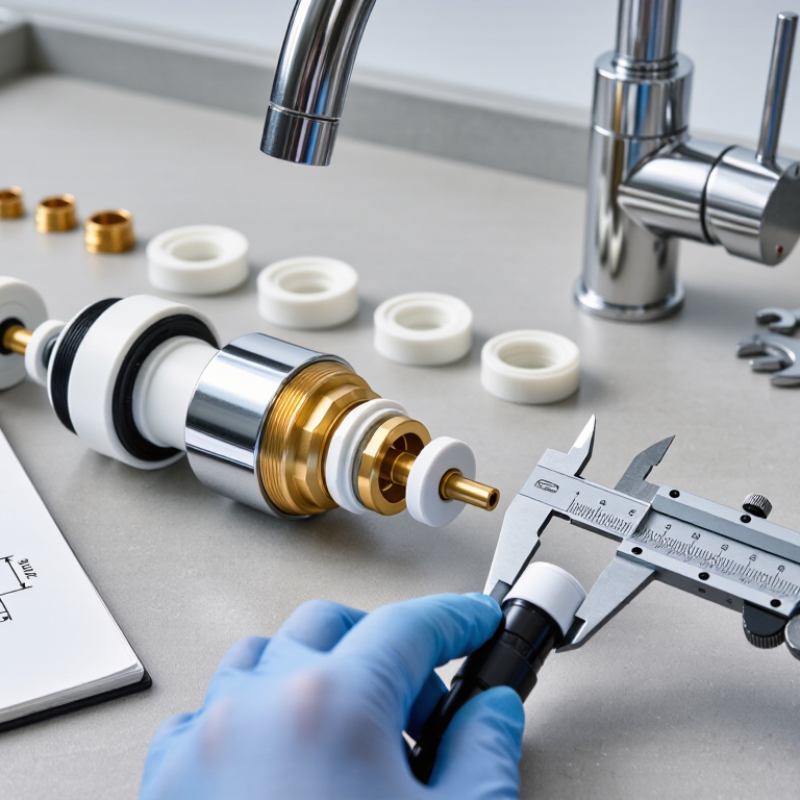
Understand How Ceramic Cartridges Work
A ceramic cartridge controls water by moving two closely fitted ceramic discs against each other. One disc stays fixed while the other turns with the faucet handle. Their openings line up to let water pass, then shift apart to reduce or stop the flow. The ceramic surfaces are hard and finely finished, so they can form a tight seal with little effort. That tiny gap matters. Even small particles can interfere with smooth movement or wear the sealing surfaces over time.
When choosing a replacement, check the cartridge’s dimensions, stem shape, and opening arrangement against the valve you have. Similar-looking parts may not fit or control water in the same way. Ceramic discs are not the only possible source of a drip; worn rubber seals, debris, or a damaged valve body can also be responsible. Not always. If the handle feels rough, turn off the water and inspect for visible grit before installing a new part. I would not assume the cartridge itself has failed until those details are checked. Water conditions and faucet design vary, so a cartridge that works well in one setup may behave differently in another.