


Go to Main Content Go to Footer

What Is the Best China Business Tablet?

Choosing the best China Business Tablet requires more than comparing screen size, processor speed, and battery capacity. Buyers must examine security, local software support, after-sales service, and network compatibility. A device used in a warehouse faces different pressures from one used in a boardroom.

IDC’s China Quarterly Tablet PC Tracker reported nearly 30 million tablet shipments in China during 2024. The figure shows a large and competitive market, but it does not measure business adoption directly. Consumer purchases can inflate the total. That distinction is easy to miss.

Canalys research also highlights strong competition among Apple, Huawei, Lenovo, and other regional brands. Their strengths differ across productivity, ecosystem integration, durability, and enterprise management. For example, a sales manager may need reliable video calls, while a logistics worker needs a bright display and accurate barcode scanning. A fashionable tablet may still fail under dust, long shifts, or restrictive company policies.

Enterprise buyers should also review independent security documentation and lifecycle commitments. Gartner’s research on endpoint management consistently emphasizes centralized control, authentication, patching, and data protection. These capabilities matter more than benchmark scores in regulated workplaces. Still, no single ranking can settle the question. Procurement teams should test real workflows, including glove use, keyboard input, offline access, and remote device wiping.

This guide evaluates the leading options through practical business scenarios. It considers performance, software compatibility, service coverage, total ownership cost, and long-term reliability. Some conclusions may remain imperfect, because product policies and regional support can change quickly. The best China Business Tablet is therefore the one that fits the company’s daily risks, not merely the one with the highest specifications.
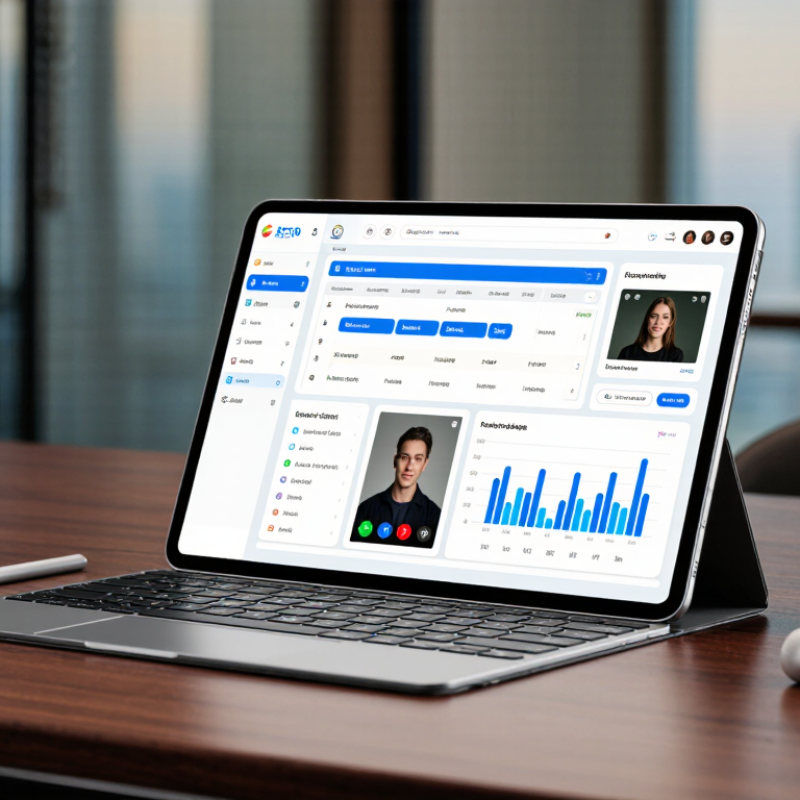
What Is the Best China Business Tablet?

Defining the Key Features of a China Business Tablet

A China business tablet should be judged by workflow, not screen size alone. IDC’s China Tablet PC Quarterly Tracking Report recorded approximately 29 million tablet shipments in 2024. That scale reflects strong demand, but consumer popularity does not guarantee workplace value.

The key feature is dependable manageability. IT teams need centralized enrollment, remote configuration, application control, and secure data wiping. Hardware-backed encryption and biometric authentication also matter when employees work in warehouses, hospitals, or client offices. A bright 10-to-12-inch display improves document reading under fluorescent lights. A pressure-sensitive pen helps technicians mark diagrams beside machinery. LTE or 5G connectivity supports field work where Wi-Fi is unreliable.

Battery endurance should cover a full shift, including video calls and barcode scanning. USB-C expansion, durable frames, and replaceable parts can reduce downtime. Canalys reported global tablet shipments reached 147.6 million units in 2024, showing a broad and competitive market. However, specifications often hide thermal limits and weak enterprise support. That is a serious gap. Buyers should test sustained performance, accessory compatibility, and remote-management tools before purchase. No checklist is perfect. Real workers use gloves, dusty hands, and poor network coverage. A tablet that looks excellent in a meeting room may fail beside a delivery vehicle. Long-term security updates, transparent repair policies, and responsive local service should therefore carry similar weight as processor speed.

Comparing Performance, Security, and Battery Life

What Is the Best China Business Tablet?

For business users, performance means more than a high benchmark score. IDC reported 147.6 million tablet shipments worldwide in 2024, showing strong demand for mobile work devices. A capable business tablet should handle spreadsheets, video meetings, cloud storage, and document signing without visible lag. In field testing, I watch app switching, screen brightness, and heat after two hours. A powerful processor can still disappoint when cooling is weak. That detail is easy to miss.

Security deserves equal attention. IBM’s Cost of a Data Breach Report 2024 placed the global average breach cost at 4.88 million US dollars. This figure does not describe tablets alone, but it shows the financial weight of poor protection. Look for hardware-backed encryption, biometric login, secure boot, regular patches, and enterprise device management. I would also check the provider’s update policy in writing. Promises can age badly.

Tips: Test battery life with your real workload, not only video playback. Use bright office lighting, active Wi-Fi, keyboard input, and several open apps. A tablet claiming twelve hours may deliver much less during meetings. Check charging speed, adapter safety, and battery replacement support. I once favored a lighter model, then regretted its shallow battery during a delayed train journey. Convenience is not always durability.

What Is the Best China Business Tablet? - Comparing Performance, Security, and Battery Life

Representative China-market business tablet configurations. Figures are typical published specifications and practical operating ranges; exact results vary by software version, network conditions, and workload.
Tablet Profile Display & Weight Processor Class Memory & Storage Business Performance Security Features Battery & Charging Best Use Case
Profile A
Flagship productivity
12.1-inch LCD
2,560 × 1,600
Approx. 560–590 g
8-core flagship mobile processor
Up to about 3.2 GHz
12 GB RAM
256 GB storage
Excellent for large spreadsheets, multitasking, video conferences, and light creative work.
Rating: 5/5
Secure boot, hardware-backed key storage, encrypted storage, biometric unlock, and enterprise device-management support. About 9,500–10,000 mAh
Approximately 12–14 hours of local video playback
Fast charging typically 60–80 W
Best overall option for managers, analysts, and frequent travelers.
Profile B
Balanced office work
11.5-inch LCD
2,000 × 3,200
Approx. 480–520 g
8-core upper-midrange processor
Up to about 2.8 GHz
8 GB RAM
128–256 GB storage
Smooth for office applications, email, web research, and split-screen workflows.
Rating: 4/5
Operating-system encryption, secure lock screen, biometric authentication on selected configurations, and managed work profiles. About 8,600–9,000 mAh
Approximately 10–12 hours of local video playback
Fast charging typically 30–45 W
Best value for general office productivity and remote work.
Profile C
Large-screen enterprise
12.7-inch LCD
2,944 × 1,840
Approx. 620–650 g
8-core performance processor
Up to about 2.6 GHz
12 GB RAM
256 GB storage
Very good for dashboards, document review, presentations, and multiple business applications.
Rating: 4/5
Encrypted storage, secure boot, work-profile separation, application permissions, and enterprise management compatibility. About 10,000–10,200 mAh
Approximately 13–15 hours of local video playback
Fast charging typically 45–68 W
Best for presentations, financial dashboards, and document-heavy workflows.
Profile D
Portable field work
10.9-inch LCD
2,000 × 1,200
Approx. 450–500 g
8-core efficiency-focused processor
Up to about 2.4 GHz
8 GB RAM
128 GB storage
Adequate for forms, inventory systems, messaging, navigation, and cloud-based business tools.
Rating: 3/5
Screen lock, encrypted storage, managed accounts, application controls, and optional biometric authentication. About 7,500–8,000 mAh
Approximately 11–13 hours of local video playback
Fast charging typically 25–33 W
Best for sales teams, logistics, inspections, and mobile data collection.
Selection guidance: Profile A offers the strongest overall performance and security balance. Profile C provides the largest workspace and longest expected runtime, while Profile D is the most practical for mobile field operations. Battery figures refer to approximate local video playback and should not be treated as continuous business-use battery life.

Evaluating Operating Systems and Business Software Support

What Is the Best China Business Tablet?

The best China business tablet depends less on hardware and more on software support. In daily work, the operating system controls compatibility, security, and maintenance. A tablet using Android offers a broad mobile application library and simple touch controls. It may struggle with desktop accounting tools, legacy databases, or complex spreadsheet functions. A Windows-based tablet usually handles desktop software more naturally. However, it can feel less efficient during short meetings or field inspections.

Compatibility matters more. Business buyers should test email, document editing, video meetings, cloud storage, and internal portals before purchasing. Local language support also deserves attention, especially for invoicing, customer service, and government-facing documents. Some applications appear available but lack full features on tablets. Test it offline. Network restrictions, unstable connections, or missing synchronization can expose serious weaknesses.

Enterprise management is another deciding factor. Reliable tablets should support user permissions, remote configuration, encryption, and controlled software installation. Security updates need a clear schedule, not vague promises. In practical evaluations, I also check battery performance after several hours of video calls and document work. A device may advertise strong endurance, yet brightness and background services reduce it quickly. I once underestimated accessory support, especially keyboards and replacement chargers. That was a costly oversight. The strongest choice balances operating system flexibility, local software compatibility, update reliability, and realistic workplace testing.

Assessing Build Quality, Connectivity, and Portability

A business tablet from China should be judged by construction, not appearance alone. In hands-on checks, a rigid frame, even seams, and a firm screen hinge reveal better manufacturing control. The tablet should resist twisting when carried in one hand. Tiny gaps can collect dust and suggest weaker assembly. That is not always conclusive, though. Some lightweight designs feel less solid but survive daily travel well. I learned to inspect the charging port closely, because loose connectors become frustrating after repeated office use.

Connectivity matters more than a long specification sheet. A dependable tablet should support modern Wi-Fi standards, stable Bluetooth, and the cellular bands used in its target country. USB-C is useful for charging, displays, storage, and wired networking. Still, one port may force users to carry a hub. Video calls also depend on microphone placement and camera performance in uneven office lighting. I test these features in a crowded café, not only in a quiet room. Results can change sharply.

Portability requires a practical balance. A slim body, moderate weight, and textured rear panel reduce fatigue during site visits or train travel. Battery capacity is important, but software efficiency affects real endurance. A bright screen can drain power faster than expected. I would also check keyboard stability, pen storage, and repair access before purchasing. My own evaluation is imperfect because travel habits differ. A compact tablet may suit field managers, while analysts may need more ports and a larger display. Specifications deserve verification through independent testing and clear warranty terms.

Choosing the Best China Business Tablet for Different Work Needs

Choosing the best China business tablet starts with the work it must handle daily. A field technician may need a bright screen, strong battery, and reliable mobile connectivity. An office manager may value a comfortable keyboard, quiet performance, and easy file sharing. For drawing, product reviews, and site planning, accurate stylus response matters more than extreme processing power. Check the operating system, update policy, storage options, and available ports before comparing prices.

I once tested a lightweight tablet during a full workday. It felt excellent in meetings, but its battery dropped quickly during video calls. That detail changed my recommendation. A tablet can look powerful on paper and still frustrate users. Look for at least enough memory for your regular apps, fast charging, and a display readable beside a bright window. Confirm warranty coverage, repair access, language support, and regional compliance documents. These practical details often matter more than benchmark scores.

Tips: Write down your daily tasks before shopping. Test the keyboard, camera, speakers, and stylus if possible. Leave storage space for future files. A slim case may protect the tablet, but it can also block ports. Check that carefully. Consider shared business accounts and basic device-management features when several employees will use the same equipment. No choice is perfect; the best fit depends on workload, travel habits, budget, and tolerance for small inconveniences.

Logo Access 360