What Is the Best Dry Type Transformer in China?
China’s dry type transformer market is expanding with data-center, railway, renewable-energy, and industrial projects. The opportunity is real. The choice is not simple.
Grand View Research estimates the global dry type transformer market reached approximately USD 5.6 billion in 2023. It also projects continued growth through 2030. MarketsandMarkets reports a lower market estimate, but identifies Asia-Pacific as the fastest-growing region. These differences matter. They reflect different definitions, product categories, and research methods.
For China, the best dry type transformer should match operating conditions, not merely a catalogue price. A 10 kV unit in a clean indoor substation faces different risks from a transformer installed near coastal salt spray. Winding insulation, temperature rise, partial-discharge performance, enclosure protection, noise, and after-sales testing all deserve attention. So does the manufacturer’s ability to provide factory test records and traceable materials.
Dr. S. V. Kulkarni, a recognized transformer engineering author, describes transformer design as “a compromise between cost, performance, and reliability.” That principle remains highly practical. Lower purchase prices can hide higher losses, difficult maintenance, or short service life. Sometimes, the cheapest option is not economical.
IEC 60076-11 provides an important reference for dry-type transformer design and testing. However, compliance alone does not prove that one Chinese supplier is the best. Site conditions, load patterns, fire requirements, and lifecycle costs must be compared carefully. This guide examines those details, while admitting one limitation: market reports cannot replace an independent technical inspection.
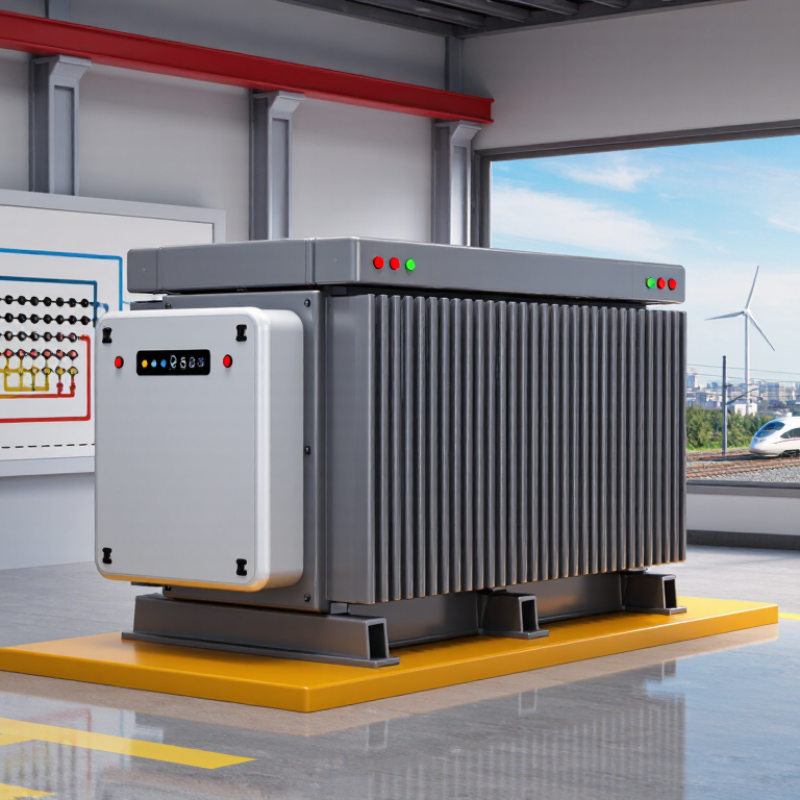
Dry Type Transformers: Definition, Structure, and Operating Principles
A dry type transformer transfers electrical energy without liquid insulation or oil. It uses air, solid insulation, or both to separate energized parts. This design reduces leakage concerns and simplifies indoor installation. It is common in factories, commercial buildings, hospitals, and renewable energy facilities.
Its main structure includes a laminated iron core, high-voltage windings, low-voltage windings, insulation, terminals, and a protective enclosure. Cast-resin windings resist moisture and dust more effectively. Vacuum-pressure-impregnated windings can offer reliable heat dissipation and practical maintenance. Cooling may rely on natural air circulation or forced fans. Sensors monitor winding temperature. Small details matter.
The operating principle follows electromagnetic induction. Alternating current creates magnetic flux in the core. This flux induces voltage in the secondary winding. The turns ratio controls voltage conversion, while core and winding losses produce heat. During selection in China, engineers should check load profile, altitude, humidity, ambient temperature, short-circuit strength, noise limits, and applicable standards. The best dry type transformer is not simply the largest or cheapest model. In field inspections, poor ventilation often causes avoidable temperature rises. An enclosure can also restrict airflow more than expected. Engineers should verify test records, insulation performance, partial discharge levels, temperature-rise results, and service access. The decision may still require revision after real operating data becomes available.