What Is the Best Water Control Gate in 2026?
Choosing the best water control gate in 2026 requires more than comparing prices or glossy product images. The right gate must manage water safely, resist corrosion, and perform reliably under changing conditions. A canal operator may need precise flow adjustment, while a flood-control project may prioritize rapid closure during extreme rainfall. These are different tasks. One gate cannot suit every site.
A dependable water control gate should match the channel size, water pressure, operating frequency, and maintenance plan. Stainless steel, coated carbon steel, and reinforced components each offer practical advantages. However, material choice depends on water chemistry and local exposure. Field experience also matters. A gate that works smoothly during a dry inspection may behave differently after months of sediment, algae, and debris. Small details count. Seals must remain flexible. Hoists should be accessible. Emergency operation cannot be an afterthought.
This guide examines leading gate types, control methods, materials, and installation concerns for 2026. It considers engineering performance, service life, operator safety, and long-term ownership costs. Manufacturer testing and recognized technical standards can support better decisions, but they do not replace site-specific evaluation. That is an important limitation. The “best” choice may still fail if the channel design is misunderstood or maintenance is neglected. Readers should compare verified specifications, request project references, and consult qualified water-management professionals before installation. Practical evidence beats confident marketing.
What Is a Water Control Gate and How Does It Work?
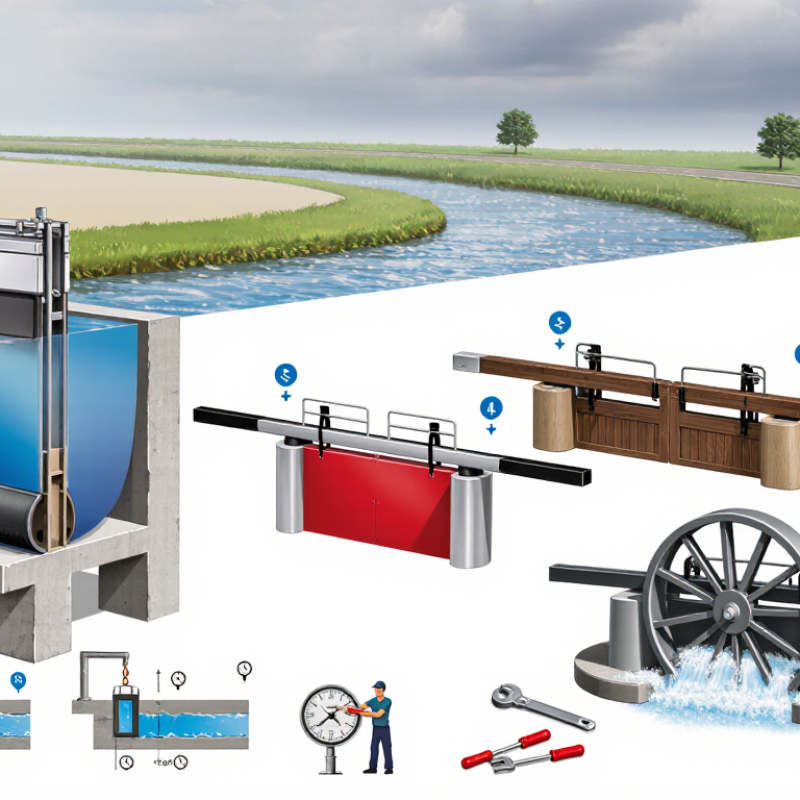
A water control gate is a movable barrier installed across a channel, dam, or reservoir outlet. It controls water level, discharge, and flow direction. When the gate rises, water passes beneath or through its opening. When it lowers, the passage becomes restricted. Water pressure increases with depth, so the gate structure must resist heavy, uneven forces. Small changes matter.
Gate types suit different conditions. Vertical slide gates work well in compact channels and drainage systems. Radial gates reduce lifting force through their curved design. Flap gates respond automatically to changing water levels, but debris can limit their movement. The best water control gate in 2026 depends on flow rate, sediment, head pressure, maintenance access, and emergency needs. The U.S. Army Corps of Engineers’ National Inventory of Dams reports more than 90,000 dams in the United States, showing how varied these installations can be.
The UNESCO World Water Development Report 2024 states that agriculture accounts for about 70% of global freshwater withdrawals. This increases demand for accurate irrigation control. A reliable gate should include corrosion-resistant materials, visible position indicators, and tested backup operation. Operators should inspect seals, hinges, hoists, and embedded concrete regularly. Sediment is easy to underestimate. Remote sensors can improve response time, yet automation cannot replace physical inspections. The weak point is often maintenance, not design. A gate may meet its specifications and still fail when debris blocks the opening or power is unavailable.