How to Choose the Right Fire Pump Hose?
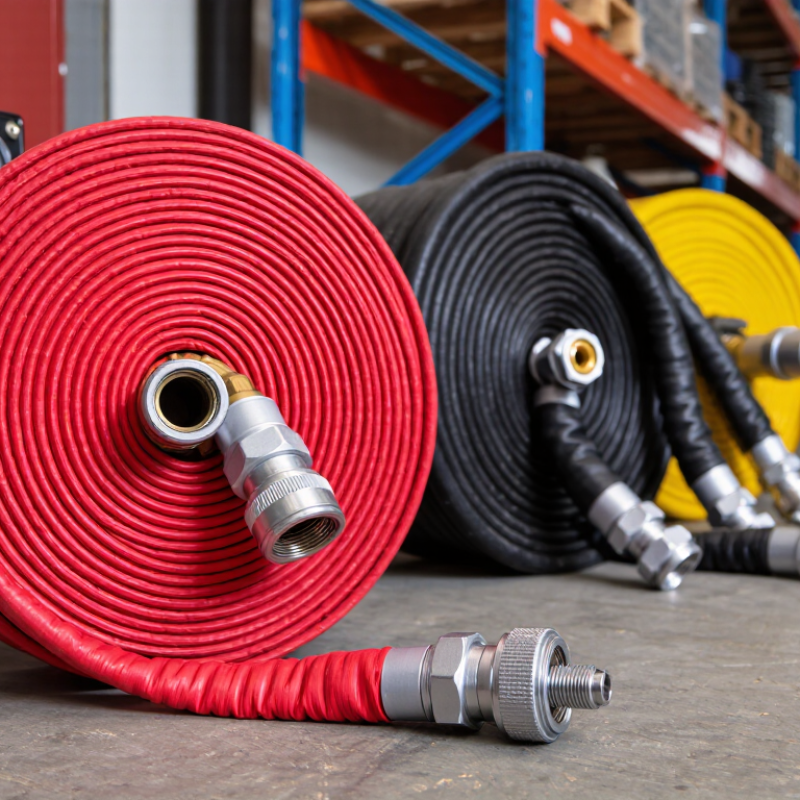
Choosing the right Fire Pump Hose is a practical decision with serious safety consequences. A hose may look durable on a warehouse shelf, yet fail under heat, pressure, or repeated bending. The correct choice depends on pump capacity, operating pressure, diameter, coupling type, length, and intended environment. It must also match applicable fire-service standards and the manufacturer’s instructions.
Fire-service instructor Mark van der Feyst states, “Training is the key to success.” His point applies directly to hose selection. Experienced crews do not judge a hose by appearance alone. They inspect its pressure rating, jacket condition, fittings, flexibility, and storage history. A hose dragged across concrete may develop hidden damage. A coupling that fits poorly can waste valuable time.
Small details matter.
This guide examines how to compare Fire Pump Hose options with a safety-focused approach. It considers water flow, friction loss, heat exposure, chemical contact, maintenance needs, and compatibility with the pump system. These factors are easy to overlook during purchasing. They should not be.
No selection is perfect. Field conditions change, product data can be misunderstood, and even a high-quality hose needs regular inspection. That honest limitation matters. Buyers should verify technical specifications, request documented test information, and consult qualified fire-equipment professionals before making a final decision. A reliable hose is not simply strong. It is suitable, tested, correctly connected, and ready for the moment pressure rises.
Define pump duty with NFPA 20’s 150% flow and 65% pressure curve
Choosing a fire pump hose starts with the pump curve, not the hose label. NFPA 20, 2022 edition, requires a centrifugal fire pump to deliver rated flow at rated pressure. At 150% of rated flow, it must still produce at least 65% of rated pressure. That point matters.
A hose selected only for the rated duty point may suffer excessive friction loss during high-flow operation. Calculate flow, length, elevation, temperature, coupling losses, and working pressure together. Then compare the hose assembly with the pump’s 150% flow condition. Include suction conditions when selecting suction hose; collapse resistance and vacuum performance can be critical during startup. Do not guess.
NFPA’s Fire Loss in the United States During 2022 report estimated 1,504,500 fires and about 18.1 billion dollars in direct property damage. These figures show why dependable water delivery cannot rely on nominal sizing alone. Field inspections often find another weakness: a hose may meet pressure requirements but restrict flow through a small internal diameter or sharp bend. Small errors compound.
Use documented hydraulic calculations, manufacturer test certificates, and inspection records. The Hydraulic Institute also emphasizes evaluating rotodynamic pumps across their operating range, rather than at one isolated point. That principle applies to hose selection. A practical review should confirm the hose’s working pressure, burst margin, flow capacity, bend radius, coupling compatibility, and temperature rating. The 65% pressure requirement is not a target for comfort; it is a demanding checkpoint that exposes weak assumptions.