How to Choose an RF Coaxial Connector in 2026?
Choosing an Rf Coaxial Connector in 2026 requires more than matching a familiar thread or interface. Modern systems demand stable impedance, low signal loss, strong shielding, and reliable performance across changing temperatures. A connector may appear suitable on a product page, yet fail when vibration, moisture, or repeated mating enters the application.
This guide explains how to evaluate connector types, materials, frequency ratings, and installation requirements. It considers common interfaces such as SMA, N, BNC, TNC, and MMCX. Each option serves a different purpose. An SMA connector may suit compact test equipment, while an N connector offers stronger outdoor performance. Small details matter.
Check the datasheet carefully. Look for return loss, insertion loss, voltage rating, contact material, sealing level, and operating temperature. Also verify cable compatibility and manufacturer test methods. A low-cost connector can become expensive after intermittent faults appear in a crowded cabinet. That lesson is easy to overlook.
Real-world selection is rarely perfect. Supplier availability, assembly skill, budget limits, and delivery schedules can change the decision. A technically excellent connector may still be impractical for a high-volume product. This article provides a practical framework for balancing electrical performance, mechanical reliability, compliance, and long-term maintenance. The recommendations reflect established RF engineering principles, but every application deserves verification through testing. Small prototypes help expose assumptions before production begins.
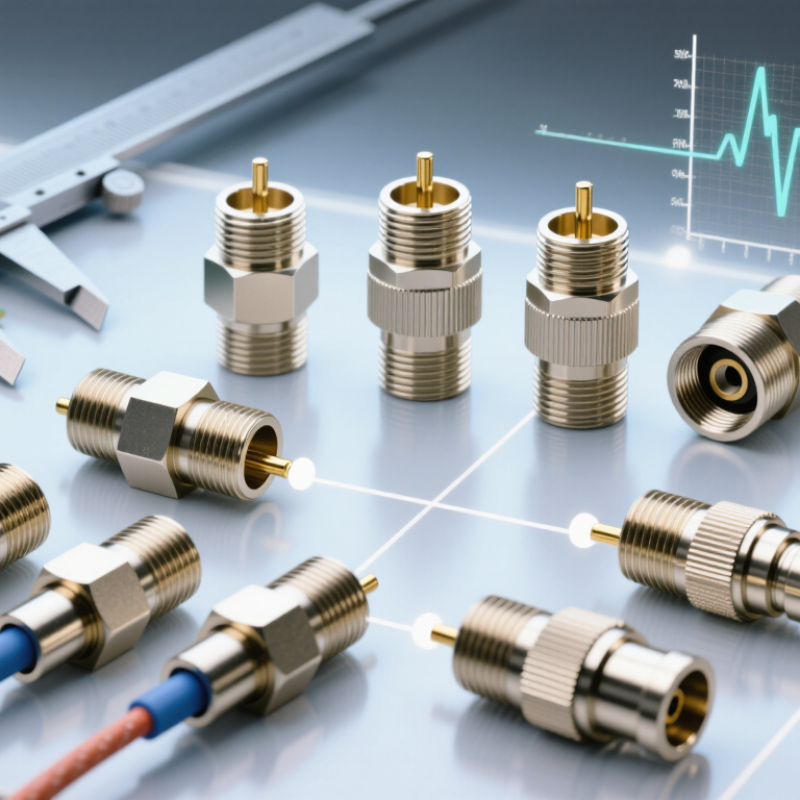
Define the RF Application, Frequency Range, and Performance Requirements
How to Choose an RF Coaxial Connector in 2026?
Define the RF application before comparing connector shapes or prices. A laboratory test port needs repeatable measurements, while an outdoor radio link needs sealing and mechanical strength. Write down the operating frequency, signal power, modulation type, and installation environment. Small details matter. A connector rated for low frequency may perform poorly at millimeter-wave frequencies. Check impedance carefully, usually 50 ohms for RF systems. A mismatch can create reflections, standing waves, and unexpected measurement errors.
Performance requirements should match the real operating conditions. Review insertion loss, return loss, voltage standing wave ratio, shielding effectiveness, and power handling. At higher frequencies, connector geometry becomes critical. Even a small gap, damaged thread, or poorly fitted cable can affect phase stability. During bench testing, I inspect the mating surfaces under magnification and verify results with a calibrated vector network analyzer. Cable movement also deserves attention. Flexible routing can change readings more than expected.
Environmental and mechanical requirements complete the decision. Consider temperature cycling, vibration, moisture, dust, mating cycles, and available installation space. A threaded interface may resist vibration, while a quick-lock design can save time during maintenance. Do not assume a connector is suitable because its datasheet looks impressive. Confirm the complete assembly, including cable, adapter, panel, and termination. I have seen good components fail after an overlooked adapter introduced excessive loss. That mistake remains worth remembering. Specification review should include tolerances, test conditions, and actual field constraints, not only headline frequency ratings.