How to Choose the Best Vape Batteries Safely?
Choosing the right Vape Batteries is a safety decision, not merely a performance upgrade. A battery can look clean while carrying hidden damage. A torn wrapper, loose terminal, or unusual heat deserves immediate attention. This guide follows established battery-safety practices, manufacturer instructions, and practical handling experience. It focuses on informed choices, not exaggerated power claims. Your device manual remains the most reliable starting point.
Small details matter. Check the battery type, size, chemistry, and continuous discharge rating before buying. Never rely only on a dramatic capacity label. Purchase from a reputable retailer, and avoid loose cells with unclear branding or missing specifications. Use a compatible charger on a stable, nonflammable surface. Do not charge overnight, in direct sunlight, or beside bedding. Store spare cells in a protective case. Never carry them with keys or coins. Metal contact can create a dangerous short circuit.
Stop immediately if a battery becomes unusually hot, swells, leaks, smells strange, or shows a damaged wrap. Replace it through an approved recycling route. Do not repair it yourself. Even careful users make mistakes. I have seen how a small tear near the positive end can become a serious warning. No checklist is perfect. Recheck the device, charger, and battery together before use. Local regulations may differ, so follow applicable safety and disposal requirements. When uncertainty remains, ask the device manufacturer or a qualified battery professional. Safety should outweigh convenience, appearance, and extra vapor.
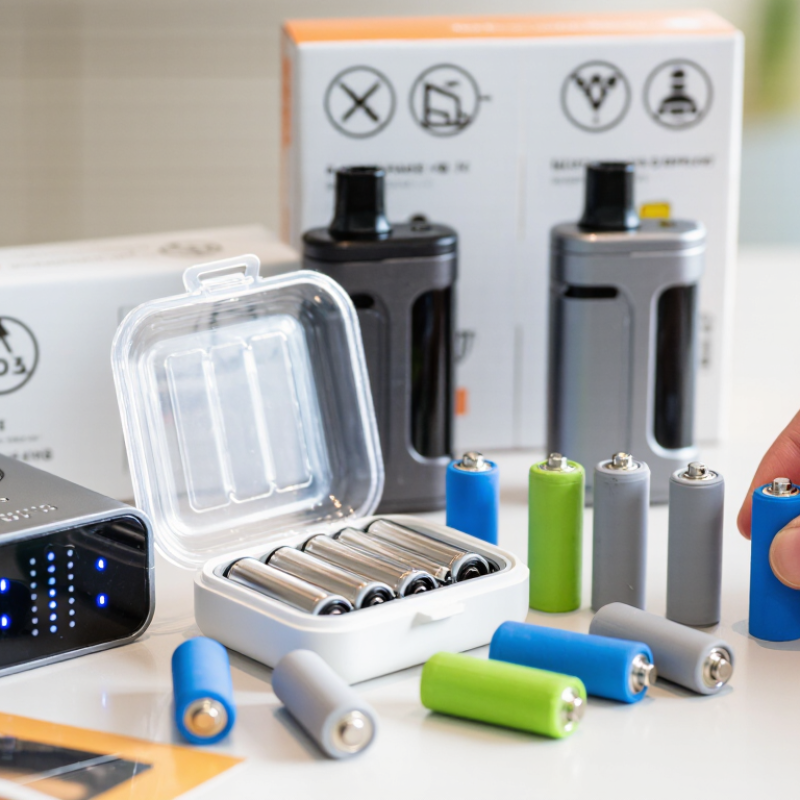
Understanding Vape Battery Types and Their Safety Features
How to Choose the Best Vape Batteries Safely?
Understanding Vape Battery Types and Their Safety Features
Most vape devices use rechargeable lithium-ion batteries. Common formats include integrated batteries and removable cylindrical cells. Integrated batteries usually include charging controls inside the device. Removable cells need closer inspection. Look for a genuine protection circuit, short-circuit protection, overcharge control, and temperature monitoring. Some high-drain cells are unprotected. They may deliver strong current, but they provide less forgiveness when damaged or misused. Bigger capacity is not automatically safer. Small differences matter.
Safety standards offer useful evidence. UL 8139 evaluates electrical systems in vaping devices, including charging and battery protection functions. IEC 62133-2 covers safety requirements for rechargeable lithium cells. A 2019 JAMA Internal Medicine analysis estimated 2,035 emergency-department visits linked to e-cigarette explosions in the United States between 2015 and 2017. That figure does not prove every battery was defective. It shows why design, storage, and charging habits deserve equal attention.
Tips: Check the battery wrap for cuts, dents, or swelling before use. Stop using damaged cells. Use the correct charger supplied for the device, and keep batteries away from keys and coins. Do not charge on a bed or beneath clothing. Store removable batteries in a rigid case. Avoid mixing old and new cells. A label alone is not proof of quality; independent testing and clear safety specifications matter more. I still find capacity claims confusing, because advertised figures may not match real performance.Winvalid
How to Choose the Best Vape Batteries Safely? - Understanding Vape Battery Types and Their Safety Features
| Battery Type or Safety Dimension | Typical Technical Data | Safety Features and Limitations | Selection Guidance |
|---|---|---|---|
| 18650 cylindrical lithium-ion cell | Approximate size: 18 × 65 mm Nominal voltage: 3.6–3.7 V Fully charged voltage: 4.2 V Capacity commonly varies by model, approximately 2,000–3,500 mAh | High-drain versions can supply substantial current, but many removable cells have no built-in overcharge, over-discharge, or short-circuit protection. | Use only the exact cell size and current rating specified by the device manufacturer. Confirm the continuous discharge rating from a reliable datasheet. |
| 21700 cylindrical lithium-ion cell | Approximate size: 21 × 70 mm Nominal voltage: 3.6–3.7 V Fully charged voltage: 4.2 V Capacity commonly varies by model, approximately 3,000–5,000 mAh | Usually offers more capacity than an 18650, but the cell still requires appropriate device protection and careful handling. | Choose it only when the battery compartment, contacts, and battery door are designed for 21700 cells. |
| 20700 cylindrical lithium-ion cell | Approximate size: 20 × 70 mm Nominal voltage: 3.6–3.7 V Fully charged voltage: 4.2 V Capacity and current capability vary significantly by model | Provides a larger format than 18650, but availability and compatibility may be more limited. Built-in protection is not guaranteed. | Use only if the device explicitly supports 20700 cells and the cell’s continuous rating is suitable for the device. |
| Li-polymer pouch battery | Typical nominal voltage: 3.7 V Fully charged voltage: 4.2 V Capacity, dimensions, and current capability are custom and device-specific | Normally installed inside the device and managed by a battery-management system. Punctures, crushing, swelling, or overheating can create serious hazards. | Do not replace it with an incompatible pouch cell. Stop using the device if the battery becomes swollen, damaged, unusually hot, or deformed. |
| Protected removable cell | Contains an added protection circuit, which may increase the overall length and reduce available current compared with an unprotected high-drain cell. | The circuit may help limit overcharge, over-discharge, overcurrent, and short-circuit conditions, but it is not a substitute for a suitable device or charger. | Check the protected cell’s actual dimensions and current limit before use. Do not assume every protected cell fits every device. |
| Unprotected high-drain cell | Designed for high-current applications; capacity and continuous discharge rating vary by cell model. | Usually relies on the device’s electronic protections. A damaged wrapper, short circuit, incorrect charging, or excessive current demand can cause overheating or thermal runaway. | Use only when the device is designed for removable high-drain cells and has verified protections for overcharge, over-discharge, short circuit, and excessive temperature. |
| Continuous discharge rating | The current a cell can deliver continuously under specified test conditions. Ratings differ between cell models and should not be inferred from capacity or marketing claims. | A higher capacity does not automatically mean a higher safe current. Using a cell beyond its verified rating can cause excessive heat and damage. | Select a cell whose verified continuous rating meets or exceeds the device requirement, with a reasonable safety margin. |
| Battery-management protections | Common protections include overcharge cutoff, over-discharge cutoff, short-circuit protection, overcurrent protection, and temperature monitoring. | Protection systems reduce risk but can fail or be absent. Mechanical devices may provide little or no electronic protection. | Read the device manual and confirm which protections are actually included before selecting a battery. |
| Battery wrapper and insulator | The outer wrapper and positive-terminal insulator prevent the metal case from contacting conductive surfaces. | Tears, cuts, exposed metal, dents, corrosion, or a loose top insulator can create a short-circuit risk. | Do not use a cell with visible damage. Replace the wrapper only with proper battery-rewrapping materials and suitable tools. |
| Charging method | Lithium-ion cells are generally charged to 4.2 V using a regulated constant-current/constant-voltage charging system. | Incorrect voltage, damaged charging ports, or unsuitable chargers can cause overheating, leakage, fire, or cell failure. | Use the supplied or manufacturer-approved charger whenever possible. Do not charge damaged batteries or leave charging unattended. |
| Battery storage and transport | Store cells in a cool, dry place away from direct sunlight, moisture, metal objects, and extreme temperatures. | Loose cells can short circuit when carried with keys, coins, tools, or other conductive items. | Use a rigid, nonconductive battery case for removable cells. Never carry loose batteries in a pocket or bag. |
| Matched cells for multi-battery devices | Cells used together should be the same type, capacity, age, and charging history. | Mixing cells can create uneven current sharing, over-discharge, or charging imbalance. | Use a dedicated, clearly marked set and charge the cells together in a suitable charger. |
| Signs of a battery emergency | Warning signs include rapid heating, hissing, swelling, leaking, unusual odor, smoke, or visible deformation. | These symptoms may indicate internal damage or thermal runaway. Water should not be used on a lithium-ion battery fire. | Stop using the device, move away from the battery if safe, leave the area if smoke or fire develops, and contact local emergency services. Dispose of damaged cells through an approved battery-recycling program. |
Note: Battery dimensions, capacity, and current ratings vary by cell model. Always follow the device manual and the cell manufacturer’s verified specifications rather than relying on generic or inflated labels.