How to Choose the Right Warehouse Racking System?
Choosing the right Warehouse Racking System begins with understanding how your facility really operates. A small e-commerce warehouse may need adjustable selective racks and clear picking lanes. A cold-storage site may require corrosion-resistant materials and equipment designed for low temperatures. Product weight, pallet dimensions, ceiling height, aisle width, and forklift type all influence the final decision.
Dr. John J. Bartholdi III, a respected warehouse operations researcher, emphasizes that warehouse design should support the flow of goods rather than simply maximize storage. That principle matters. More pallet positions can look efficient on paper, yet narrow aisles may slow every order. A rack that fits today’s inventory may become a costly obstacle after seasonal growth. Real measurements matter.
Look closely.
Before comparing suppliers, record pallet weights, daily movements, SKU variety, picking methods, and available floor space. Walk the proposed layout with operators. They often notice blocked sightlines, awkward turns, or unsafe reaching positions before a spreadsheet does. Reliability also depends on installation quality, inspections, load signage, and future maintenance. Certified design advice is valuable, especially when loads are heavy or buildings have unusual constraints.
There is no perfect system. That is easy to forget. Selective, drive-in, double-deep, cantilever, and automated solutions each solve different problems. The strongest choice balances capacity, access speed, safety, budget, and expansion plans. A careful review may reveal that the most expensive option is unnecessary, while the cheapest option could restrict growth. Expect to revise the plan. Warehouses change. Your Warehouse Racking System should change with them.
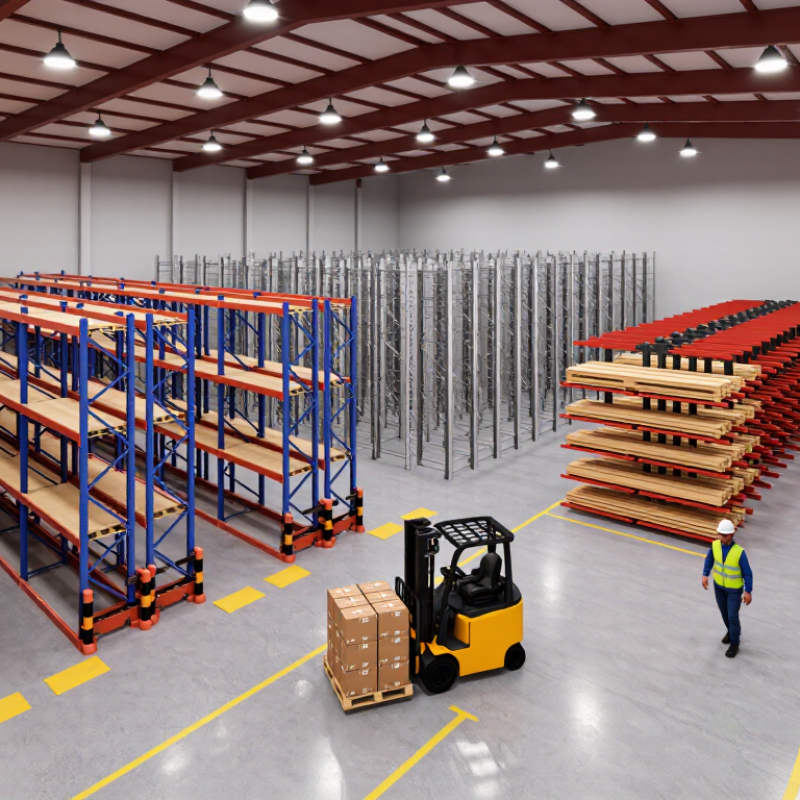
Define Storage Goals, Inventory Profiles, and Warehouse Constraints
How to Choose the Right Warehouse Racking System?
Define storage goals before comparing racking types. Decide whether the priority is capacity, faster picking, better visibility, or flexible growth. The 2024 MHI Annual Industry Report found that 83% of supply chain professionals expect technology and innovation investment to increase within five years. That pressure makes capacity planning important, but automation should not replace clear storage logic. A practical target might be 95% pallet location accuracy and shorter travel paths.
Study the inventory profile in detail. Record SKU count, pallet dimensions, product weight, turnover rate, and replenishment frequency. Fast-moving cartons near dispatch may suit accessible shelving, while slower full pallets can use denser storage. Measure the real load, not the label estimate.
One overloaded beam can create a serious operational risk.
The Warehousing Education and Research Council’s 2024 benchmarking research continues to identify labor productivity and order accuracy as major warehouse performance concerns. Racking should support both.
Warehouse constraints can quietly decide the design.
Check floor loading, clear height, columns, dock positions, sprinkler clearance, aisle width, and emergency routes. CBRE’s 2024 North American Industrial and Logistics Occupier Survey reported continued demand for well-located, efficient logistics space, making every usable square meter valuable.
Still, maximum density is not always better. I once saw a layout gain locations but lose picking speed because aisles became uncomfortable for equipment. Review the plan with operators, maintenance staff, and a qualified engineer. Test one zone before committing to the entire building.