How to Choose the Right Water Chiller Evaporator?
Choosing the right Water Chiller Evaporator is not simply a matter of selecting the largest heat-transfer surface. The decision affects cooling capacity, energy use, maintenance, and equipment life. A well-matched evaporator keeps chilled water stable, even when process loads change during the day. An incorrect choice may cause high pressure drop, poor heat transfer, or repeated compressor cycling.
Start with real operating conditions. Record the required cooling load, chilled-water flow rate, inlet and outlet temperatures, refrigerant type, and expected ambient conditions. These figures should come from measured plant data whenever possible. A calculation based only on a nameplate can be misleading. It looks precise. It may not be.
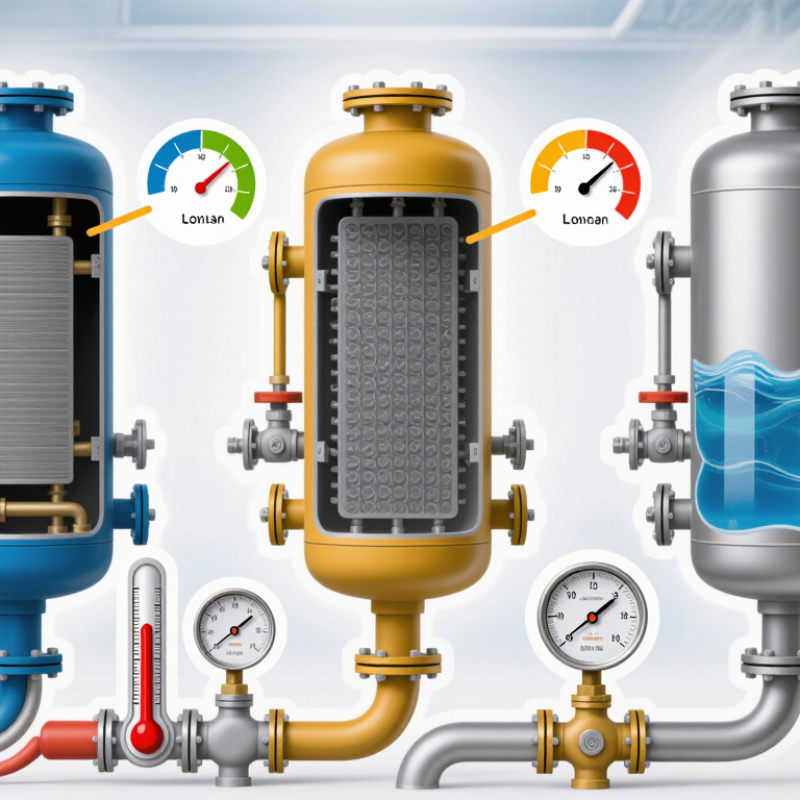
Shell-and-tube, brazed plate, and flooded evaporators each suit different applications. Brazed plate units are compact and efficient, but water quality and service access require careful review. Shell-and-tube designs often offer stronger maintenance flexibility, especially in larger systems. Flooded models can deliver excellent performance, but they need suitable refrigerant management and skilled commissioning.
A reliable selection also considers fouling risk, freeze protection, materials, control response, and future capacity changes. Experienced engineers compare manufacturer performance tables with recognized testing requirements and site conditions. They also check whether the stated capacity remains valid at the actual flow rate. Small details matter here. A two-degree temperature assumption can change the result significantly.
This guide explains how to compare evaporator designs with practical engineering judgment. It also highlights common selection mistakes, because even experienced teams can overlook installation limits, seasonal loads, or water-treatment problems. Performance on paper is only the beginning.
Evaporator Basics and Their Role in Water Chiller Performance
In a water chiller, the evaporator is where liquid refrigerant absorbs heat from circulating water. This heat exchange strongly affects cooling efficiency and stability. I have found that many selection errors begin with capacity alone. A unit rated for the correct cooling load may still perform poorly if its water flow, refrigerant circuit, or approach temperature is unsuitable. The evaporator needs careful matching. Small details matter.
Flooded evaporators keep the heat-transfer surface wet, often supporting strong efficiency at steady loads. Direct-expansion designs meter refrigerant through tubes and can offer a compact arrangement. Neither type is automatically best. Consider entering and leaving water temperatures, seasonal load changes, allowable pressure drop, and maintenance access. Tube material matters when water chemistry is aggressive. Strainers, filtration, and regular inspection help limit fouling, which acts like an unwanted blanket over the tubes.
During commissioning, record water flow, temperature difference, suction pressure, and superheat. Compare those readings with the design data, not guesswork. A rising approach temperature can signal fouling, low flow, or refrigerant imbalance. I once focused too heavily on nominal efficiency and overlooked cleaning access. That decision created avoidable downtime. The better question is practical: can technicians verify performance and service the evaporator without disrupting the entire chiller?