10 Tips for Choosing the Right Wired Push Button?
Choosing the right Wired Push Button is a practical decision, not a simple catalog exercise. The button may sit quietly on a panel, yet it controls a human action, a machine response, or a safety-related process. A good choice must match the operator, equipment, environment, and expected service life.
Don Norman, a leading authority in human-centered design, said, “Design is really an act of communication.” That idea applies directly to control panels. A red button with a clear label should communicate its function within seconds. Its size, color, travel, and resistance should feel deliberate, even when the operator wears gloves. Small details matter. Very much.
This guide, “10 Tips for Choosing the Right Wired Push Button,” examines the factors that buyers often compare too late. These include contact configuration, rated voltage, switching current, mounting dimensions, actuation force, ingress protection, material quality, and mechanical endurance. IEC 60947-5-1 may also matter for industrial control equipment, depending on the application and certification requirements. Check the datasheet carefully. Product names can hide important differences.
A button used beside a dusty conveyor needs different protection from one installed inside a clean control cabinet. A wet workshop, cold warehouse, or vibrating machine adds further pressure. Even experienced teams sometimes focus on price and overlook wiring access or replacement time. That is an imperfect habit worth challenging. The best Wired Push Button is not always the most expensive model. It is the one that performs predictably, communicates clearly, and remains serviceable after thousands of presses.
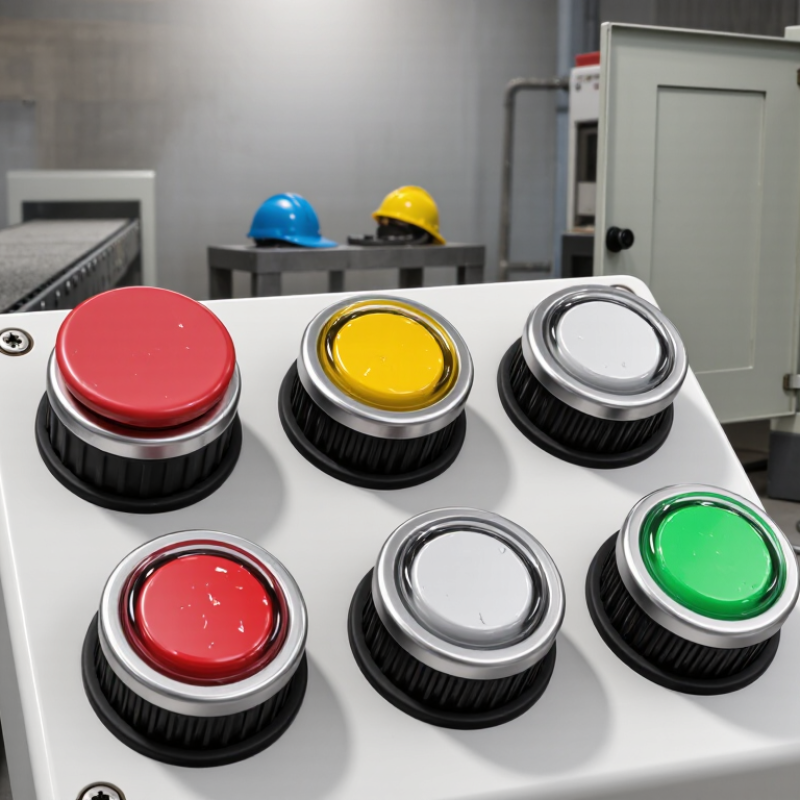
Define the Application: Function, Voltage, Current, and Duty Cycle
Before choosing a wired push button, define what the control must do. A momentary button sends a signal only while pressed; a latching button maintains its state after release. That difference changes the circuit, operator behavior, and safety response. Write the function in one line. In field testing, vague descriptions caused avoidable wiring changes. “Start motor” is not enough; specify whether the button commands a relay, controller input, or load directly.
Check voltage at the button terminals, not only the supply label. A 24 V DC control circuit behaves differently from a 230 V AC circuit. Confirm the rated voltage matches the real system, including tolerances and switching transients. Current rating deserves equal attention. A button rated for resistive current may not handle motor inrush or an inductive coil. Measure normal current, estimate peak current, and verify the load category in the technical documentation. Do not guess here.
Duty cycle describes how often and how long the button operates. A door control pressed ten times daily has different demands from a machine interface used every few seconds. Record presses per hour, hold duration, and expected service life. Look at contact bounce, enclosure protection, cable length, and terminal security. I have sometimes focused too heavily on headline current ratings and missed mechanical wear. That mistake is worth revisiting. For safety-related equipment, a qualified professional should verify the complete circuit before installation.