How to Choose a 3 Wheel Electric Auto in 2026?
Choosing a 3 Wheel Electric Auto in 2026 requires more than comparing prices and battery sizes. Buyers must match the vehicle to daily routes, passenger needs, charging access, and local road conditions. A compact model may fit narrow streets, yet struggle on steep hills or uneven pavement. Small details matter.
This guide examines practical factors used in professional vehicle evaluations. It considers motor output, battery chemistry, charging time, braking performance, suspension design, weather protection, and cargo capacity. A useful test includes a full passenger load, a realistic route, and repeated starts on an incline. Manufacturer claims can help, but independent reviews and verified specifications deserve equal attention. Check the warranty carefully. Ask who supplies replacement batteries and how quickly service is available.
Safety should remain central. Look for stable three-wheel geometry, effective lights, mirrors, seat belts where applicable, and predictable steering. Local registration, insurance, speed limits, and equipment requirements may differ, so buyers should confirm them with official authorities before purchase. A vehicle that appears road-ready may still need additional approval.
Range estimates are not absolute. Cold weather, heavy cargo, tire pressure, and frequent acceleration can reduce usable distance. I would not choose the longest advertised range automatically. That approach sounds sensible, but it can overlook comfort and service support. A cheaper model may become expensive after one unavailable component. On the other hand, premium branding does not guarantee better ownership. By comparing evidence, testing realistic conditions, and admitting uncertainty, readers can select a 3 Wheel Electric Auto that suits real transportation needs in 2026.
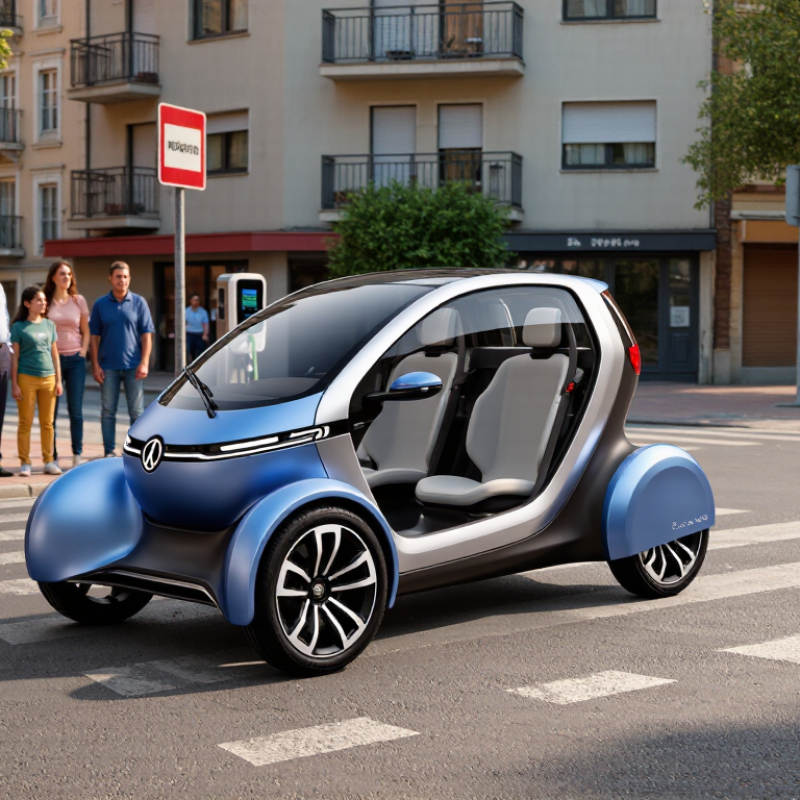
Define the Vehicle Class: EU Regulation 168/2013 and the 45 km/h L5e Threshold
Choosing a three-wheel electric auto in 2026 starts with the correct EU vehicle class. Regulation (EU) 168/2013 separates L2e mopeds from L5e motor tricycles. L2e vehicles generally stay at or below a 45 km/h maximum design speed. L5e vehicles exceed that moped threshold, subject to their full type-approval characteristics. The speed number matters, but it is not the only test.
That distinction matters. An L5e vehicle may require different approval documents, braking equipment, lighting, mirrors, and safety testing. Check the EU Certificate of Conformity, not only the seller’s product page. The stated maximum design speed should be clearly recorded. A glossy listing can still be wrong.
The International Energy Agency’s Global EV Outlook 2024 reports that electric three-wheelers already achieved more than half of new three-wheeler sales in India during 2023. Europe is a different operating environment. Local approval, charging access, payload, and winter range can matter more than headline battery capacity. Measure your usual route with passengers and cargo. Then compare the vehicle’s approved mass and axle loads.
Do not assume a 45 km/h model is an L5e vehicle. It may belong to the slower L2e category. I would verify the VIN, conformity certificate, and national registration route before paying a deposit. That extra check feels tedious. It can prevent an expensive mismatch between the vehicle you want and the vehicle legally delivered.
| Vehicle Class | Legal Category | Key Speed or Power Boundary | Wheel Arrangement | Typical Seating or Use | Important Mass or Design Criteria | What It Means for an Electric 3-Wheel Auto |
|---|---|---|---|---|---|---|
| L2e | Three-wheel moped | Maximum design speed of 45 km/h | Three wheels | Maximum of two seats, including the driver | For electric propulsion, the maximum continuous rated power is generally 4 kW. The unladen mass must not exceed 270 kg, excluding batteries. | Suitable for low-speed urban travel when the vehicle is type-approved as an electric moped. It is normally more restricted than an L5e vehicle in speed, power, mass and seating. |
| L5e | Motor tricycle | More than 45 km/h maximum design speed, or propulsion characteristics exceeding the L2e boundary | Three wheels arranged symmetrically in relation to the longitudinal median plane | Passenger or commercial configuration, depending on the subtype | The vehicle is classified as a motor tricycle when it exceeds the relevant L2e limits. The exact technical requirements depend on the applicable L5e-A or L5e-B subtype. | Choose this class when the vehicle is designed for speeds above 45 km/h, higher performance, or a larger passenger or cargo format than an L2e vehicle permits. |
| L5e-A | Road tricycle | Falls within the L5e motor-tricycle category; it is not limited to the 45 km/h moped ceiling | Three symmetrical wheels | Designed primarily for carrying passengers; maximum of five seats, including the driver | Passenger-focused body design and equipment must comply with the applicable type-approval requirements for the vehicle. | Consider L5e-A for a passenger-oriented electric three-wheeler requiring more than two seats or a design speed above the L2e limit. |
| L5e-B | Commercial tricycle | Falls within the L5e motor-tricycle category | Three symmetrical wheels | Designed exclusively for carrying goods | It uses an enclosed driving position and is intended for commercial transport. The applicable technically permissible maximum mass and body requirements must be checked in the vehicle approval documents. | Consider L5e-B for delivery, maintenance or cargo operations rather than passenger transport. Cargo capacity and axle-load limits should be checked separately from battery capacity. |
| L6e | Light quadricycle | Maximum design speed of 45 km/h | Four wheels, not three | Usually a maximum of two seats, depending on the subtype | Maximum continuous rated power is generally 6 kW. The unladen mass must not exceed 425 kg, excluding batteries. | This is not a three-wheel category, but it is a useful comparison when a buyer is considering a small enclosed electric vehicle limited to 45 km/h. |
| L7e | Heavy quadricycle | No general 45 km/h ceiling equivalent to L2e or L6e | Four wheels, not three | Passenger or commercial use, depending on the subtype | It has higher mass and performance limits than L6e. The exact limits differ between passenger and commercial subcategories. | Use this only as a regulatory comparison. A three-wheel vehicle should not be treated as L7e merely because it is larger or faster. |
| Not a vehicle class | 45 km/h threshold | 45 km/h is primarily the upper design-speed boundary associated with moped categories such as L1e-B and L2e | Depends on the actual vehicle category | Depends on the approved class | The threshold is a maximum design-speed criterion, not a recommended everyday driving speed and not a universal L5e limit. | A three-wheel electric vehicle limited to 45 km/h may be L2e if it meets all L2e requirements. An L5e vehicle is generally above the L2e performance boundary and should not be described simply as a “45 km/h L5e.” |
| All categories | Type-approval and registration check | Verify the approved maximum design speed, not only the motor marketing specification | Confirm the number and arrangement of wheels | Confirm the approved number of seats and intended use | Check the certificate of conformity, technically permissible maximum mass, unladen mass, battery treatment, power rating, braking equipment, lighting and required safety systems. | The registration documents and certificate of conformity should identify the legally approved category. A modified controller, battery or motor may affect compliance and registration status. |
| Selection rule: Start with the approved vehicle class, maximum design speed, seating requirement and intended use. For a passenger-oriented three-wheel electric vehicle, compare L2e with L5e-A. For a goods-oriented vehicle, compare the relevant L5e-B requirements. The 45 km/h limit is not, by itself, an L5e definition. | ||||||