How to Choose a DIP LED Display for Outdoor Use?
Choosing a DIP LED display outdoor system is not just a matter of picking the brightest screen. The right choice depends on viewing distance, installation height, local weather, and how often the display will run. A roadside sign viewed from across a street needs a different pixel pitch from a screen outside a stadium entrance. Small details matter.
DIP LEDs are often considered for outdoor displays because their separate red, green, and blue lamps can provide strong brightness and a robust physical structure. But no specification tells the whole story. Ask for measured brightness, pixel pitch, refresh rate, and the viewing angle, then compare them with the actual site. Stand where viewers will stand. Check whether direct sunlight washes out the content, and whether nearby buildings create glare or shade. A sample cabinet can reveal color consistency that a brochure cannot.
Weather resistance needs careful attention. Review the stated IP rating, cabinet seals, drainage design, and operating temperature range. These details help assess exposure to rain, dust, and heat, but installation quality still matters. Ask how technicians access modules, power supplies, and cables. Repairs should not require dismantling half the screen. That happens.
Power use and control systems also affect long-term costs. Request real operating data, not only peak figures, and confirm that the controller supports the content and scheduling needs. If possible, inspect a working display in similar conditions. A perfect specification sheet is not a guarantee; I would still verify the details on site. This guide outlines the practical checks that make a DIP LED display outdoor choice more reliable.
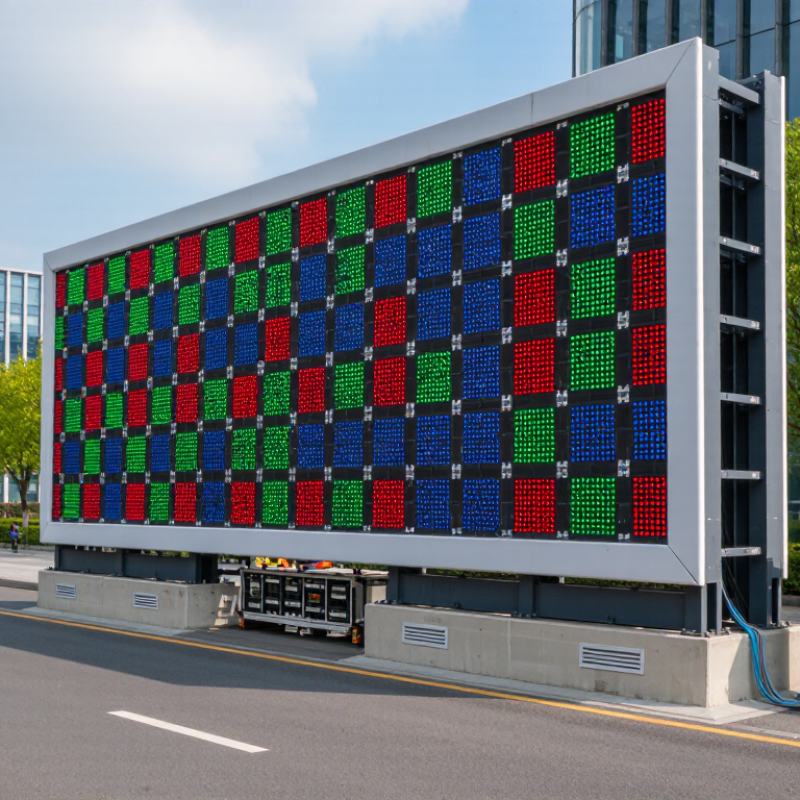
Define the Outdoor Site Conditions and Required IP65 Protection Under IEC 60529
Choosing a DIP LED display outdoors starts with the site, not the cabinet. Record direct rain, wind-driven dust, sunlight, coastal salt, temperature swings, and drainage. IEC 60529:2013 defines IP6X as dust-tight protection. It defines IPX5 as protection against water jets. IP65 therefore covers dust and rain-like jets, but not immersion.
The IPX5 test uses a 6.3-millimetre nozzle and approximately 12.5 litres of water per minute. The test distance is about three metres, according to IEC 60529:2013. These figures matter when checking enclosure design. A shallow roof may reduce exposure, but it cannot replace sealed modules, protected cable entries, and correctly compressed gaskets. IP65 also does not prove resistance to ultraviolet ageing, salt fog, condensation, or extreme heat. This distinction is often missed.
Tips: Measure the actual installation area after rain. Inspect low points where water may collect. Ask for the complete IP test report, not only a marketing label. Check whether testing covered the assembled display, connectors, and rear service doors. A field inspection is still necessary. Seals can loosen during transport or maintenance. Reflect on the real environment, because a laboratory rating is only one part of outdoor reliability.