How to Choose an Outdoor LED Sign in 2026?
Choosing an Outdoor Led Sign in 2026 requires more than comparing screen size and price. It involves visibility, weather resistance, energy use, service access, and content performance. A bright display may attract attention, but excessive brightness can waste energy and reduce viewing comfort. The best choice balances measurable performance with the site’s real conditions.
Industry data supports this growing focus. Grand View Research valued the global digital signage market at approximately $26.7 billion in 2023, with continued growth expected through 2030. PQ Media’s Global Digital Out-of-Home Forecast also identifies digital out-of-home media as a continuing growth area, driven by flexible content and measurable audience exposure. These reports indicate stronger demand for reliable displays, not simply larger screens. However, market forecasts vary. They should guide decisions, not replace site testing.
Look closely at the installation environment. A roadside sign may face direct sunlight, dust, wind, and temperature changes every day. Request measured brightness, pixel pitch, refresh rate, viewing distance, and power consumption. Confirm the cabinet’s outdoor protection rating, such as IP65, and review recognized electrical and structural certifications for your region. Ask how quickly modules, power supplies, and control cards can be replaced. Small details matter. A failed module above a busy entrance can disrupt communication and create avoidable maintenance costs.
This guide explains how to compare an Outdoor Led Sign for visibility, durability, operating efficiency, content control, and long-term value. Some recommendations will remain imperfect, because climate, traffic, budgets, and local requirements differ. Careful testing is still essential.
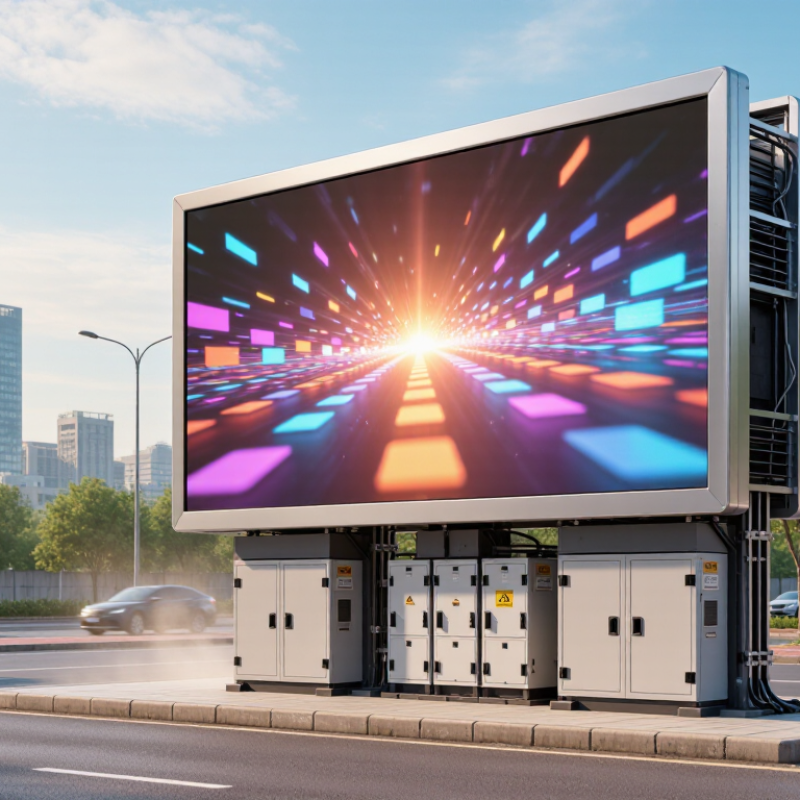
Define Your Outdoor LED Sign’s Purpose and Viewing Conditions
Choosing an outdoor LED sign starts with its job, not its pixel pitch. A roadside board needs rapid recognition. A retail sign may need product detail and changing promotions. A campus display may prioritize schedules and emergency messages. The purpose determines content length, brightness, resolution, and operating hours.
The viewing environment matters just as much. Measure the distance from the nearest viewer, vehicle speed, approach angle, and nighttime ambient light. A driver passing at 50 mph has limited reading time. Large characters and short messages usually outperform dense layouts.
The 2023 edition of the U.S. Federal Highway Administration’s Manual on Uniform Traffic Control Devices emphasizes legibility, contrast, and avoiding distracting displays near roads. Apply that principle carefully, even when your sign is not a traffic-control device.
Sunlight is unforgiving.
Choose automatic brightness control, but verify its nighttime setting on site. Excessive brightness wastes energy and can create glare. The U.S. Department of Energy’s 2024 Solid-State Lighting R&D Opportunities report identifies efficacy and thermal management as continuing LED performance priorities. Look for documented power consumption, operating-temperature limits, and weather protection. IP ratings describe water and dust resistance, not every installation risk.
Test a real message from the farthest viewing point. It may look perfect on a sample panel. Field conditions can disagree. The Outdoor Advertising Association of America reported $9.1 billion in U.S. out-of-home advertising revenue in 2023, showing the medium’s scale, but scale does not guarantee communication. A sign can be bright, sharp, and still poorly matched to its audience.