| Shower-arm connection | Most household shower heads use a 1/2-inch threaded connection. The exact thread standard may be NPT, BSP, or another regional standard. | A correct connection prevents leaks that can waste water and avoids forcing incompatible threads together. | Measure the existing shower-arm outlet and confirm the thread standard before ordering. | Choose a model with the same thread standard, or use a properly rated adapter. Do not cross-thread the fitting. |
| Available water pressure | Many efficient shower heads work across a broad household pressure range, but the required minimum pressure varies by design. Low-pressure models are intended for weak-flow systems. | A shower head designed for the available pressure can maintain useful spray performance while using less water. | Check the product’s minimum and maximum operating pressure. If pressure is unknown, have it measured at a fixture. | For gravity-fed or visibly weak systems, select a low-pressure design rather than simply choosing the lowest flow rating. |
| Maximum flow rate | In the United States, the federal maximum for standard shower heads is 2.5 gallons per minute (gpm), equal to approximately 9.5 liters per minute (L/min). WaterSense-labeled shower heads use no more than 2.0 gpm, approximately 7.6 L/min. | Flow rate is the most direct indicator of potential water and water-heating energy savings. | Look for the tested flow rate on the packaging or technical specification, not only terms such as “eco” or “water saving.” | For a practical balance between comfort and savings, compare models around 1.5–2.0 gpm, or approximately 5.7–7.6 L/min. |
| Local plumbing rules | Maximum permitted flow rates can be stricter than national requirements. Some jurisdictions require lower-flow fixtures than the general U.S. federal limit. | Choosing a compliant fixture avoids installation problems and ensures the claimed savings are acceptable locally. | Check local building, water-efficiency, or rental-property requirements before purchase. | When rules are uncertain, choose a clearly documented low-flow model and retain its specification sheet. |
| Fixed or handheld format | Fixed shower heads attach directly to the shower arm. Handheld models normally require a hose connection and a wall bracket or slide bar. | Handheld models can reduce water waste when rinsing specific areas, but additional connections create more potential leak points. | Confirm whether the package includes the hose, bracket, diverter, and required washers. | Choose a fixed model for the simplest installation. Choose handheld only when the extra flexibility is useful. |
| Diverter valve requirement | A two-outlet shower system may need a compatible diverter to switch between a fixed head and a handheld sprayer. | An unsuitable diverter can restrict flow, cause leakage, or prevent both outlets from operating correctly. | Check whether the existing valve supports the required outlet arrangement and pressure conditions. | Use a complete, matched set when adding a second outlet instead of combining random components. |
| Pressure-compensating design | Some efficient shower heads include a flow regulator intended to limit output across a specified pressure range. | Pressure compensation helps keep water use closer to the rated flow when supply pressure changes. | Verify the manufacturer’s stated pressure range and whether the regulator is removable or fixed. | Prefer a certified or independently tested model with a clearly stated flow rate and operating range. |
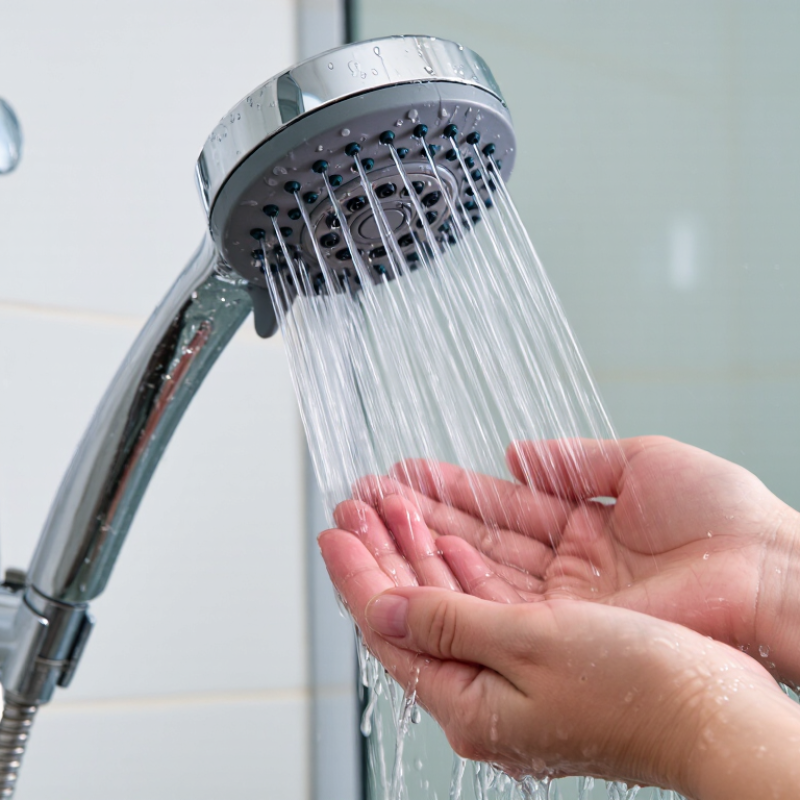
| Anti-clog spray nozzles | Flexible rubber or elastomer nozzles make it easier to remove mineral deposits by wiping the spray face. | Mineral buildup can distort spray patterns and encourage users to increase flow or replace the fixture prematurely. | Inspect whether the nozzles are accessible and whether the shower head can be removed for cleaning. | For hard-water areas, choose easy-clean nozzles and clean them regularly according to the care instructions. |
| Built-in filter | A shower filter may reduce certain sediments or odors, but performance depends on the filter media and replacement schedule. It does not soften hard water unless specifically designed and rated to do so. | A clogged cartridge can reduce pressure and increase maintenance costs, while an unmaintained filter may impair performance. | Check cartridge availability, replacement interval, added length, and pressure loss. | Do not select a filter solely for water saving; choose one only when its treatment function is needed. |
| Hot-water system capacity | Lower flow reduces the volume of hot water demanded per minute. Tankless heaters may have a minimum activation flow, while storage heaters have finite hot-water capacity. | A suitable low-flow head can reduce water-heating demand, but an extremely low flow may affect some tankless systems. | Confirm the water heater’s minimum activation flow and required temperature rise. | Choose a flow rate that saves water without falling below the reliable operating threshold of the heater. |
| Temperature stability | Some thermostatic or pressure-balancing systems are sensitive to major changes in flow, especially in older plumbing. | Unstable temperature may cause repeated adjustments, wasted water, or an unsafe showering condition. | Test temperature stability after installation while other household fixtures are running. | If temperature fluctuates, have the mixing valve, pressure-balancing valve, and supply lines inspected. |
| Pipe condition and flow restriction | Corroded, scaled, undersized, or partially blocked pipes can reduce flow regardless of the shower head selected. | A low-flow head cannot correct a plumbing restriction and may feel uncomfortable when combined with poor supply conditions. | Compare flow at the shower with another fixture and inspect the shower-arm inlet screen for debris. | Resolve blockages or plumbing faults before judging the performance of a water-saving shower head. |
| Installation sealing | Threaded shower connections generally require a suitable seal, such as plumbing tape or an approved thread sealant, depending on the connection design. | A small leak at the wall or shower arm can waste water continuously and may damage surrounding materials. | Follow the fitting instructions and check for leaks after the water has run for several minutes. | Use a new washer when supplied, tighten firmly by hand, and avoid overtightening decorative fittings. |
| Measurement after installation | Actual flow can be checked by collecting shower water for a timed interval and converting the volume to a per-minute rate. | Testing confirms whether the installed system delivers approximately the advertised flow under real household conditions. | Measure with the shower running normally and repeat the test at different temperature settings if needed. | Record the result and inspect for leaks, uneven spray, or temperature changes before finalizing the installation. |