What Is an Inflatable Raft Boat and How Does It Work?
An Inflatable Raft Boat is a portable watercraft built from air-filled chambers, reinforced fabric, and a stable floor system. Unlike a rigid boat, it gains most of its shape and strength from internal air pressure. Many models use welded PVC or coated polyester, while higher-end boats may use Hypalon-style materials for improved durability.
The working principle is straightforward. A hand pump forces air through one-way valves into separate chambers. As pressure increases, the tubes become firm and support the boat’s weight. Multiple chambers improve stability and provide limited backup if one section loses air. The floor may be inflatable, slatted, or made from removable boards. Oars move the boat through the water, while selected models accept small motors within their rated limits.
In practical use, setup quality matters. A properly inflated tube feels firm, but it should not become dangerously rigid under strong sunlight. Temperature changes affect air pressure. A cold morning can make the boat seem soft, while afternoon heat raises pressure. Experienced users inspect seams, valves, handles, and drain plugs before launching. They also carry a repair kit and avoid sharp rocks whenever possible.
This design is useful for fishing, rescue support, leisure trips, and calm-water exploration. However, it is not automatically safe in every environment. Wind, waves, passenger weight, and poor loading can quickly reduce control. It is easy to overstate an inflatable boat’s toughness. Manufacturer capacity ratings and local water-safety guidance deserve careful attention. Small details matter. A short inspection can prevent a long problem.
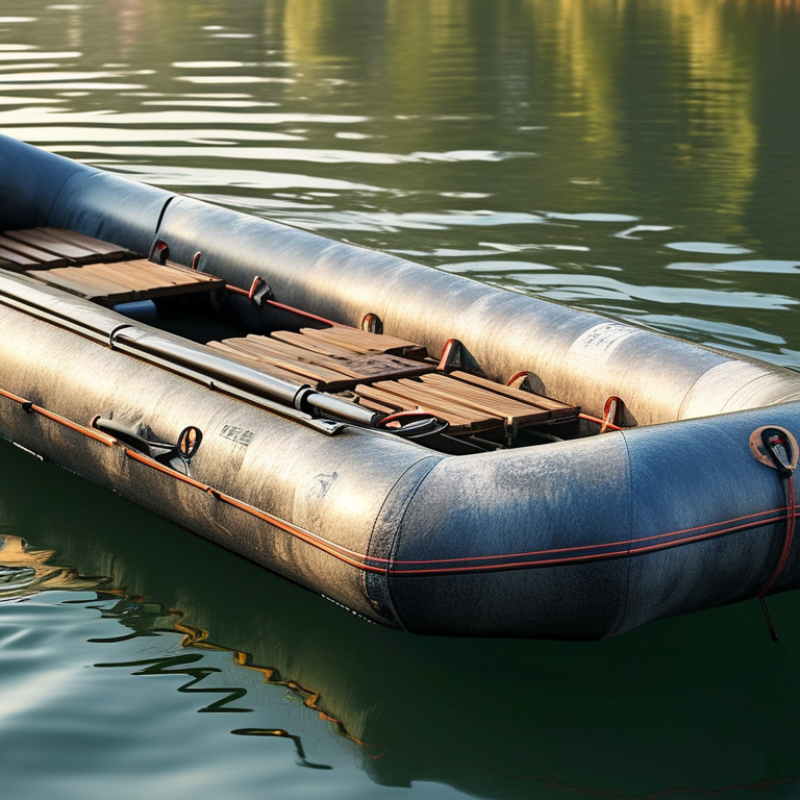
Inflatable Raft Boats Defined by ISO 6185 Classes and Marine Applications
An inflatable raft boat is a lightweight vessel formed by air-filled tubes, an inflatable or rigid floor, and a transom when an outboard motor is fitted. Separate chambers create reserve buoyancy. If one chamber loses pressure, the others may keep the boat afloat, although performance can change quickly. Valves control inflation, while oars, a small motor, or both provide movement.
ISO 6185 defines inflatable boats through construction, buoyancy, propulsion, and intended operating conditions. Its class system connects the boat with its marine application, ranging from protected inland water to more exposed coastal or offshore use. The exact requirements depend on the relevant ISO 6185 part, engine power, passenger capacity, and hull configuration. A higher class is not simply a promise of unlimited safety.
On sheltered lakes, a compact low-power boat may suit fishing, rescue support, or short recreational trips.
Coastal models need stronger floors, secure fittings, and better resistance to waves and spray.
Offshore designs demand careful load control, reliable air pressure, and correctly rated safety equipment.
Air pressure matters.
In practical use, operators often carry too much gear and underestimate wind. That mistake reduces freeboard and makes turning less predictable. I have also found that a pressure gauge is more trustworthy than judging firmness by hand. Before launching, inspect seams, valves, handles, and the transom. The ISO class helps define capability, but real conditions still require conservative decisions.