Top 10 Types of Wheelchair Vans for Global Buyers
Choosing suitable wheelchair vans requires more than comparing prices, colors, or advertising claims. A vehicle must support safe transfers, comfortable travel, and dependable daily use. This guide examines the top 10 types of wheelchair vans for global buyers, including side-entry, rear-entry, minivan, full-size, lowered-floor, ramp-equipped, and lift-equipped designs.
Every type serves different needs. Door width, ramp angle, interior height, turning space, and seating layout can change the experience dramatically. A steep ramp may become difficult in heavy rain. A narrow aisle may frustrate an active wheelchair user. Small details matter.
Reliable decisions begin with verified specifications and practical inspection. Buyers should review manufacturer documentation, conversion quality, warranty coverage, maintenance access, and local service support. Independent accessibility specialists can also help confirm whether a vehicle matches the user’s wheelchair dimensions and transfer method. Standards and registration requirements vary between countries, so local professional advice remains important.
There is no perfect van.
A spacious full-size vehicle may offer easier entry but consume more fuel. A compact model may park easily but provide less storage. Electric options may reduce operating costs, yet charging access can be limited in some regions. These trade-offs deserve honest attention.
The following overview compares each wheelchair vans category through usability, flexibility, ownership concerns, and real-world comfort. It avoids treating every buyer alike. Families, caregivers, private users, and commercial operators may reach different conclusions. Even experienced buyers should recheck measurements before ordering. A promising brochure is not a physical test.
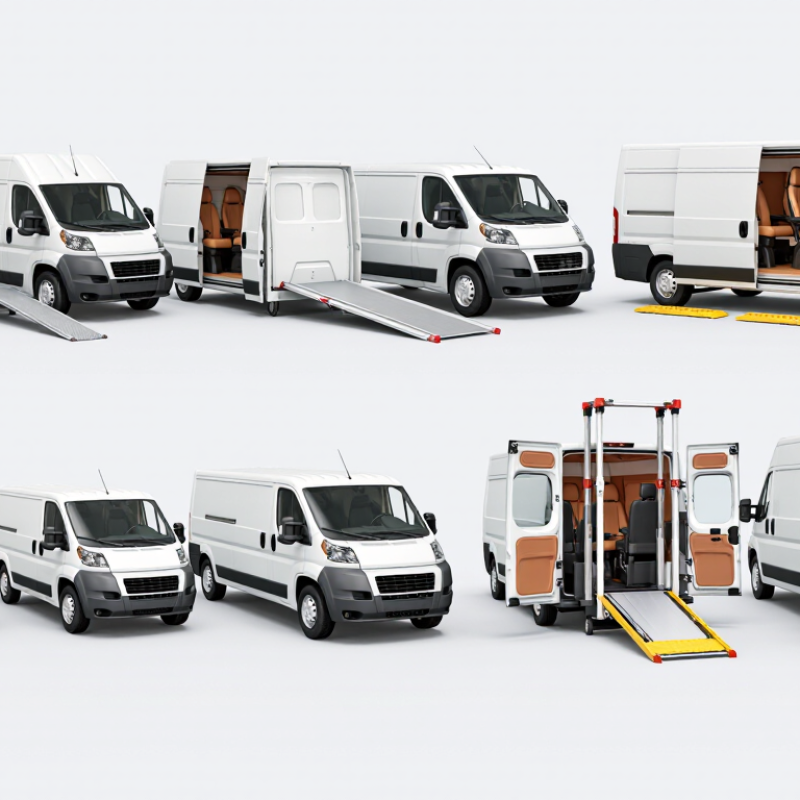
What Defines a Wheelchair Van and How Are Its Main Types Classified?
A wheelchair van is a vehicle modified to transport a wheelchair user safely, with enough interior space for entry, positioning, and securement. The WHO and UNICEF Global Report on Assistive Technology estimates that more than 2.5 billion people need assistive products worldwide. That figure may reach 3.5 billion by 2050. Demand is not a niche issue.
The ten common types are side-entry ramp vans, rear-entry ramp vans, hydraulic-lift vans, fold-out-lift vans, lowered-floor vans, high-roof vans, manual-wheelchair vans, power-wheelchair vans, driver-transfer vans, and passenger-focused vans. These categories overlap. A high-roof vehicle can also use a side-entry ramp. A lowered floor can support either manual or powered chairs. The main classification usually depends on access method, floor design, wheelchair position, and driving requirements. ISO 7176 standards address wheelchair testing and securement, but real-world fit still depends on chair dimensions, turning space, and occupant needs. A specification sheet cannot show every awkward angle.
Tips: Measure the wheelchair with its user seated. Record total height, width, weight, and joystick position. Check ramp slope, door clearance, tie-down locations, and emergency access. The Global Report on Assistive Technology also stresses user-centered assessment. That advice sounds simple, yet buyers often overlook parking height or wet-weather grip. A local mobility professional should verify the conversion before purchase.
| No. | Wheelchair Van Type | Primary Access Configuration | Typical Wheelchair Capacity | Typical Passenger Arrangement | Best-Suited Applications | Main Advantages | Important Limitations |
|---|---|---|---|---|---|---|---|
| 1 | Rear-Entry Minivan | Rear ramp Manual or powered fold-out ramp |
1 wheelchair | Usually 4–6 seated passengers, depending on the interior conversion | Private family transport, parking spaces with limited side clearance, and individual users | Access can be convenient where adjacent vehicles are parked closely; generally simpler rear loading layout | Requires adequate space behind the vehicle and may have less flexible curbside loading |
| 2 | Side-Entry Minivan | Side ramp Manual or powered ramp through a sliding door |
1 wheelchair, with some layouts supporting 2 | Typically 4–6 seated passengers, or fewer when a wheelchair position is occupied | Families, caregivers, curbside boarding, and users who need direct access to a side transfer area | Good curbside accessibility; may allow the wheelchair user to sit near the front passenger area | Needs sufficient space beside the vehicle and may require more structural modification |
| 3 | Full-Size Low-Floor Side-Entry Van | Side ramp Extended sliding-door opening with lowered floor |
1–2 wheelchairs | Commonly 6–10 occupants, depending on seating and restraint layout | Large families, community transport, hotel transfers, and long-distance passenger service | More interior height, width, and seating flexibility than most minivans | Larger exterior dimensions, higher purchase and operating costs, and greater parking requirements |
| 4 | Full-Size Rear-Entry Van | Rear liftRear ramp Rear loading through a wide opening |
1–4 wheelchairs | Often configured for multiple wheelchair passengers with foldable or removable seats | Institutional transport, accessible shuttle services, hospitals, schools, and group travel | Efficient for multiple wheelchair positions and straight-in loading at a designated parking area | Requires clear space behind the vehicle; rear loading may be unsuitable on busy streets |
| 5 | High-Roof Accessible Van | Side or rear access Ramp or platform lift with increased roof height |
1–4 wheelchairs | Usually 6–12 occupants, subject to vehicle size, seat layout, and local regulations | Users with larger power chairs, tall passengers, medical equipment, and commercial passenger transport | Improved headroom and interior circulation; suitable for bulky mobility equipment | Greater overall height may restrict access to low-clearance garages and car parks |
| 6 | Wheelchair-Accessible MPV | Side or rear ramp Compact multi-purpose vehicle with a lowered or adapted floor |
1 wheelchair | Usually 4–7 occupants, depending on the seating configuration | Urban mobility, smaller families, medical appointments, and markets where compact dimensions matter | More maneuverable and economical than many full-size vans while retaining accessible entry | Less interior space and payload capacity for large power chairs or several passengers |
| 7 | Wheelchair-Accessible SUV | Rear rampSide ramp Model-specific floor modification or rear access |
Normally 1 wheelchair | Typically 4–5 occupants, with reduced seating when the wheelchair position is installed | Mixed urban and rural travel, users who prefer higher ground clearance, and light off-road environments | Higher driving position and SUV-style road clearance; may offer all-wheel-drive availability | Limited interior height and wheelchair space compared with vans; fewer conversion options |
| 8 | Driver-Accessible Wheelchair Van | Side or rear entry Wheelchair docking system, transfer aids, and adapted driving controls |
1 wheelchair in the driver position, sometimes with an additional passenger wheelchair | Passenger seating varies according to driving position and control equipment | Independent drivers who remain seated in their wheelchair while operating the vehicle | Supports greater driving independence and can be tailored to individual reach and control needs | Requires professional assessment, specialized restraint systems, and compliance with local vehicle laws |
| 9 | Accessible Taxi or Shuttle Van | RampPlatform lift Commercial-grade entry and restraint equipment |
1–2 wheelchairs | Often 5–9 passengers, depending on the vehicle class and wheelchair layout | Accessible taxi operations, airport transfers, tourism, hotel services, and demand-responsive transit | Designed for frequent loading, durable interior materials, and flexible passenger turnover | Commercial regulations, inspection requirements, and higher daily usage can increase operating costs |
| 10 | Multi-Wheelchair Transport Shuttle | Rear liftSide lift Multiple wheelchair restraint stations and removable seats |
2–6 wheelchairs | Passenger capacity depends on wheelchair dimensions, restraint spacing, and required aisle clearance | Rehabilitation centers, care facilities, public agencies, schools, and organized group transportation | High carrying capacity and adaptable interior for different wheelchair sizes and passenger needs | Larger turning radius, increased curb weight, and more complex lift, restraint, and maintenance requirements |
Related Posts
-

Revolutionizing Mobility with Wheelchair Vans Transforming Lives and Accessibility with Data Driven Insights
-
Top 10 Best Wheelchair Vans for Sale
-

Choosing the Right Mobility Vans: A Comprehensive Guide for First-Time Buyers
-

Top 10 Mobility Vans for 2025: Features, Pricing, and Best Options
-
China Top 10 Wheelchair Accessible Vehicle Manufacturers
-
7 Essential Tips for Choosing the Best Wheelchair Vans for Global Buyers