What Is the Best Type of Floor Mat?
Choosing the best type of Floor Mats depends on where they will be used, how often they face dirt, and what comfort you expect. A mat beside a rainy doorway needs different qualities than one beneath an office chair. Material, texture, size, backing, and cleaning needs all matter. There is no single winner for every room.
In real homes, rubber mats often handle wet shoes and heavy traffic well. They stay practical near entrances, garages, and kitchens. Coir mats can scrape mud effectively, but they may shed fibers and dislike constant moisture. Fabric mats feel warmer underfoot and offer more colors. However, they can hold stains if spills are ignored. Memory foam mats provide noticeable cushioning, especially during long periods of standing. Their edges may curl over time.
Small details matter.
Look at the floor beneath the mat. Smooth tile may need a reliable non-slip backing, while some finishes can react poorly to rubber or latex. Measure the doorway before buying. A thick mat can catch a door and become a daily annoyance. Check whether the product is washable, low-odor, and suitable for indoor use. Manufacturer care instructions remain more dependable than attractive product claims.
The best choice balances safety, maintenance, appearance, and comfort. I have found that the most expensive option is not always the most useful. Even careful comparisons can miss household differences, such as pets, children, or unusually damp weather. Reconsider the mat after a week of use. If it moves, traps moisture, or feels uncomfortable, it may not be the right type.
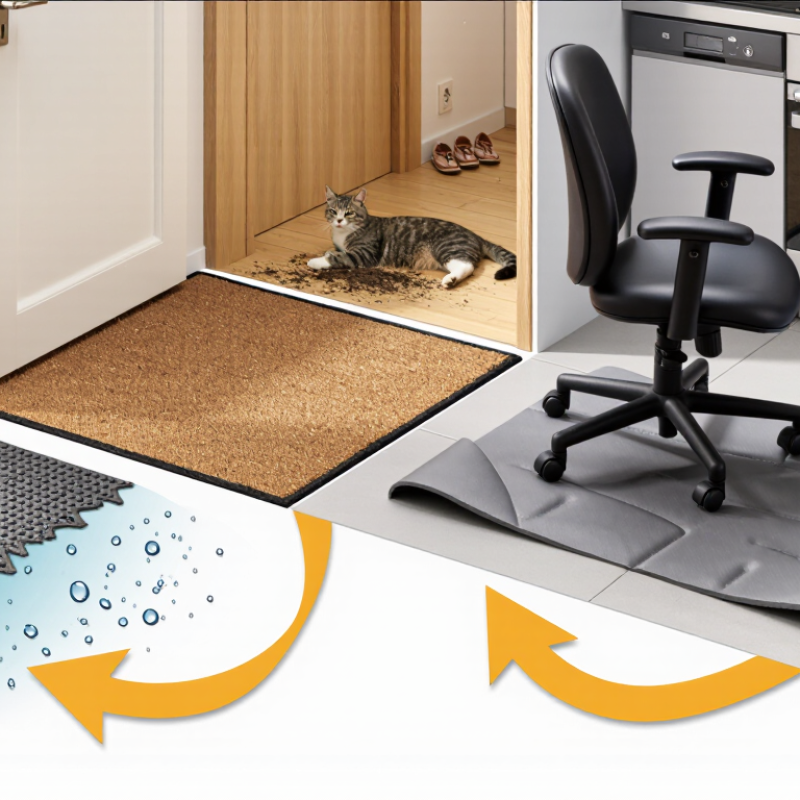
Types of Floor Mats and Their Main Features
What Is the Best Type of Floor Mat?
Types of Floor Mats and Their Main Features
The best floor mat depends on location, traffic, moisture, and cleaning routines. Entry mats remove grit before it scratches hard flooring. They usually combine coarse fibers with a rubber or vinyl backing. A 2024 Grand View Research analysis projects the global floor mats market to grow at about 5.5% annually through 2030. Demand is rising, but bigger sales do not always mean better performance.
Water-absorbing mats suit entrances during rain or snow. Look for dense fibers, stable edges, and a backing that stays flat. Scraper mats work better outdoors because raised patterns trap mud and stones. They can feel harsh underfoot. That is often useful, not comfortable. Anti-fatigue mats support workers standing at counters or benches. Their foam layers reduce pressure, but soft surfaces may catch wheels or create trip points. I have seen good mats fail when their edges curl after repeated washing.
Rubber mats offer strong grip and resist heavy use. They suit workshops, kitchens, and commercial corridors, provided they tolerate the floor beneath them. Carpet mats feel warmer and collect fine dust, yet they need frequent vacuuming. ASTM International’s F1637 standard emphasizes clean, dry, and slip-resistant walking surfaces. The World Health Organization reported an estimated 684,000 fatal falls worldwide in 2019, so mat placement deserves careful attention. A larger mat is not automatically safer. Check its edges, moisture retention, backing condition, and cleaning instructions every week. Loose mats remain a problem.
What Is the Best Type of Floor Mat? - Types of Floor Mats and Their Main Features
| Type of Floor Mat | Common Materials | Main Features | Best Locations | Water Resistance | Dirt and Moisture Control | Comfort and Appearance | Cleaning and Maintenance | Main Advantages | Potential Limitations |
|---|---|---|---|---|---|---|---|---|---|
| Rubber Mat | Natural rubber or synthetic rubber | Flexible, durable, slip-resistant, and able to withstand heavy foot traffic | Garages, workshops, entrances, kitchens, gyms, and commercial areas | Excellent | Good for containing water and protecting floors from dirt; usually has a textured surface | Firm underfoot; practical appearance with limited decorative variety | Shake, sweep, vacuum, or wash with mild soap and water; allow to dry fully | Long service life, strong floor protection, and good traction | Can be heavy, may have a rubber odor when new, and some types may discolor certain floors |
| Coir Mat | Coconut husk fibers | Coarse natural fibers scrape dirt from shoe soles and provide a traditional entrance look | Covered entryways, porches, foyers, and sheltered outdoor entrances | Moderate | Very effective at removing dry dirt and grit; absorbs some moisture | Firm and naturally textured; warm, rustic appearance | Shake or vacuum regularly; keep away from prolonged standing water | Excellent scraping ability and renewable natural fiber content | Fibers can shed, edges may fray, and it dries slowly when saturated |
| Nylon Carpet Mat | Nylon fibers with a rubber or vinyl backing | Dense, resilient pile designed to trap dirt and absorb moisture | Indoor entrances, offices, schools, hotels, and retail spaces | Good | Strong performance for capturing dust and absorbing water from footwear | Comfortable and available in multiple colors and surface textures | Vacuum frequently; spot-clean stains and use periodic deep cleaning when necessary | Durable, attractive, and effective for high-traffic indoor areas | May retain moisture if not dried properly and can require more frequent cleaning |
| Polypropylene Mat | Polypropylene fibers with a synthetic backing | Lightweight, stain-resistant, quick-drying, and suitable for printed designs | Indoor entrances, covered outdoor areas, homes, and event spaces | Good | Captures light dirt and handles occasional moisture; performance depends on pile design | Soft to moderately firm; offers many colors and patterns | Vacuum or hose clean according to the backing; dry thoroughly before reuse | Cost-effective, color-retentive, and resistant to many common stains | Usually less abrasion-resistant than nylon in very heavy commercial traffic |
| PVC or Vinyl Mat | Polyvinyl chloride | Non-porous, flexible, waterproof, and available with raised channels or drainage patterns | Bathrooms, kitchens, utility rooms, workshops, and covered entrances | Excellent | Channels can direct water and collect debris; generally does not absorb moisture | Moderately comfortable; functional appearance with many surface patterns | Wipe, sweep, or wash with mild detergent; avoid harsh solvents | Easy to clean, water-resistant, and suitable for spills | May become brittle in extreme cold or fade with prolonged direct sunlight |
| Aluminum Grille Mat | Aluminum profiles with replaceable textile or rubber inserts | Rigid modular construction, high load capacity, and effective scraping and wiping action | Commercial entrances, public buildings, airports, and high-traffic facilities | Very Good | Open construction can trap dirt below the walking surface and allow moisture to drain | Firm underfoot; clean, architectural appearance | Lift or roll sections for debris removal; clean inserts and drainage areas regularly | Highly durable, professional-looking, and suitable for intensive traffic | Higher purchase and installation cost; may require a recessed frame or professional fitting |
| Interlocking Foam Mat | Ethylene-vinyl acetate or cross-linked polyethylene foam | Cushioning, impact reduction, lightweight construction, and modular installation | Exercise areas, playrooms, workshops, and standing workstations | Good | Resists light moisture but is mainly designed for cushioning rather than entrance cleaning | Soft and comfortable; available in tile formats and multiple colors | Wipe with diluted mild detergent; separate tiles to clean edges when needed | Comfortable, easy to install, and helpful for reducing fatigue and impact | Can dent under heavy furniture, show wear, and separate at joints over time |
| Anti-Fatigue Mat | Rubber, PVC, polyurethane, or layered foam | Elastic cushioning designed to reduce discomfort during prolonged standing | Standing desks, kitchens, workshops, laboratories, and service counters | Good to Excellent | Some models include drainage holes or textured surfaces, but dirt-trapping ability varies | Comfort-focused with a supportive, resilient surface | Wipe or mop with mild detergent; inspect edges and surface for wear | Can reduce leg and foot fatigue and improve standing comfort | Not always suitable for rolling chairs; edges may create a trip hazard if curled |
| Brush Mat | Stiff nylon or polypropylene bristles with a rubber or plastic base | Firm bristles remove soil from shoe grooves and offer strong scraping performance | Outdoor or semi-outdoor entrances, industrial sites, and busy entry points | Good | Excellent for removing dry and coarse dirt; limited absorption unless combined with textile fibers | Firm walking surface; utilitarian appearance | Shake, vacuum, or hose clean; clear debris from the base regularly | Effective at reducing tracked-in soil and durable in demanding conditions | May feel harsh underfoot and can be noisy on hard surfaces |
Selection tip: The best floor mat depends on the location, amount of foot traffic, exposure to water, cleaning requirements, and desired level of comfort.