Why Choose a Tumbler Mug for Your Brand?
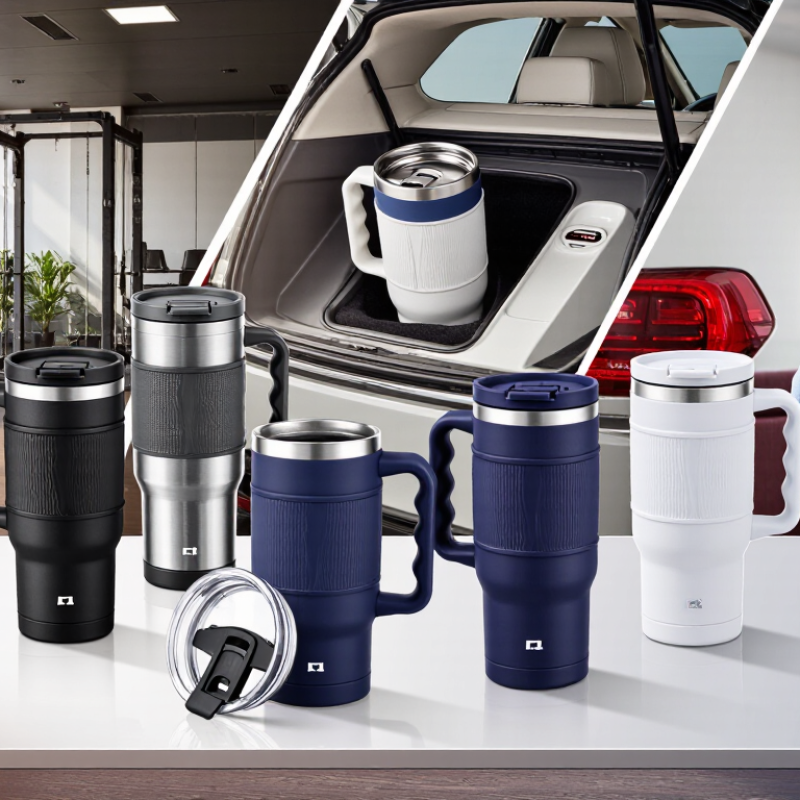
Why choose a Tumbler Mug for your brand? The answer is not simply its popularity. It is the daily visibility created when a customer carries your logo through offices, gyms, cars, and airport lounges.
Grand View Research valued the global reusable water bottle market at approximately $9.67 billion in 2023. It also projects a 4.4% compound annual growth rate from 2024 to 2030. Tumblers represent only one part of this category. Market definitions vary, so the numbers should not be treated as exact Tumbler Mug sales. Still, the direction is clear: consumers increasingly value reusable, portable drinkware.
Terence Reilly, former president of Stanley, described the brand’s purpose simply: “We want to be a part of people’s everyday lives.” That principle matters for promotional products. A useful Tumbler Mug can create repeated brand impressions without demanding attention. Its lid, handle, powder-coated surface, and insulation should support real routines, not just attractive photographs. A 2024 report from Fortune Business Insights also identifies sustainability and convenience as major forces shaping the reusable bottle market.
The detail that gets overlooked is fit. A mug that leaks inside a laptop bag damages trust quickly. A lid that is difficult to clean may become unused. Your brand therefore needs more than a printed logo. It needs tested materials, clear care instructions, responsible packaging, and a design people will genuinely carry. That is not guaranteed. It requires honest product testing.
What Is a Tumbler Mug and How Does It Work?
A tumbler mug is a reusable drinking vessel designed to hold hot or cold beverages. Most models use double-wall construction, often with a vacuum between the walls. This empty space slows heat transfer through conduction and convection. Your coffee stays warmer, while iced water melts more slowly. It is not magic.
The lid also affects performance. A tight seal limits heat loss and helps prevent spills during commuting. Some lids use sliding covers, while others include openings for straws. The mouth opening should balance comfort with control. A wide opening is easier to clean, but it may release heat faster. From practical testing, the small details matter: grip texture, cup balance, and the lid’s resistance to daily movement.
For a brand, this function creates useful space for identity and repeated visibility. However, choosing a tumbler requires more than checking its appearance. Food-contact materials should be clearly specified, and removable parts should be easy to wash. Insulation claims should come from consistent testing, not vague promises. No tumbler performs perfectly. A metal exterior may feel hot near the rim, and a complex lid can collect residue. Those weaknesses deserve honest attention before customization. A reliable tumbler should feel stable in the hand, close securely, and remain practical after repeated use. That is where thoughtful design becomes more valuable than decoration.
Why Choose a Tumbler Mug for Your Brand? - What Is a Tumbler Mug and How Does It Work?
| Evaluation Dimension | Typical Tumbler Mug Information | How It Works or Why It Matters | Brand Customization Opportunity |
|---|---|---|---|
| Definition | A reusable beverage container with a narrow opening, lid, and usually a double-wall body. | The lid helps reduce spills, while the insulated body can slow heat transfer between the beverage and the surrounding environment. | Use the product shape, lid style, and surface finish to create a consistent visual identity. |
| Common Capacity | Approximately 300–900 milliliters, depending on the intended use. | Smaller sizes suit espresso-based drinks and short commutes; larger sizes accommodate water, tea, coffee, and cold beverages. | Select a capacity that matches the daily routines and beverage preferences of the target audience. |
| Insulation Structure | Double-wall construction with an air gap or vacuum between the inner and outer walls. | The separation reduces conduction and convection, helping beverages retain their temperature longer than in many single-wall containers. | Communicate practical temperature-retention benefits without making unsupported time or temperature claims. |
| Typical Materials | Stainless steel, polypropylene, silicone, glass, or combinations of these materials. | Stainless steel is commonly used for durability and insulation; polypropylene and silicone are often used for lids, seals, and grip components. | Choose materials according to durability, appearance, weight, cleaning requirements, and intended price position. |
| Temperature Use | Suitable models may be designed for hot drinks, cold drinks, or both. | A secure lid and heat-resistant components can improve usability, but the product should be used according to its safety instructions. | Define the primary use case clearly, such as commuting, office hydration, outdoor activities, or hospitality service. |
| Leak Resistance | Depends on the lid mechanism, gasket quality, closure design, and correct assembly. | Silicone seals and locking or threaded lids can help limit leakage, but leak resistance is not automatically the same as being fully leakproof. | Use verified testing results and accurate wording when describing leak-resistant performance. |
| Portability | Designed for carrying in a hand, cup holder, bag, or backpack, depending on its dimensions. | A tapered base, secure lid, comfortable grip, and manageable weight can make a tumbler easier to carry during daily travel. | Optimize dimensions and accessories for commuting, events, travel, fitness, or workplace use. |
| Cleaning Requirements | Regular washing is needed, especially around the lid, drinking opening, and silicone gasket. | Removable parts can make cleaning easier and help reduce residue buildup; dishwasher suitability varies by component and product design. | Provide clear care instructions and consider wide openings or detachable lids for better everyday maintenance. |
| Reusable Value | Designed for repeated use rather than single-use beverage consumption. | Repeated use can reduce dependence on disposable cups when the tumbler is maintained and used consistently. | Position the product around long-term utility, responsible consumption, and repeated customer exposure. |
| Decoration Areas | Common decoration zones include the body, lid, sleeve, and gift packaging. | Large, smooth surfaces generally provide more room for readable graphics than heavily curved or textured areas. | Apply logos, artwork, color blocking, laser engraving, or printed messages according to the surface and production method. |
| Durability Factors | Influenced by wall thickness, material quality, lid construction, coating, and resistance to daily handling. | A durable design can withstand repeated transport and use, although no tumbler is completely immune to dents, scratches, or damage. | Match the construction level to the expected usage environment and the desired customer experience. |
| Best-Fit Use Cases | Commuting, office work, meetings, conferences, travel, outdoor activities, and employee gifting. | The combination of portability, reusable design, and visible surface area supports frequent practical use. | Choose messaging, colors, and packaging that reflect the event, audience, season, or campaign objective. |
Note: Specifications vary by product design. Capacity, materials, insulation performance, cleaning instructions, and leak-resistance claims should be confirmed through the applicable product documentation and testing.